Cover ADU Design & Permitting: The Austin Owner’s Guide
We stock and install Cover-compatible ADU design and permitting packages across Austin, with design-and-permit work typically running $8,500 to $17,500 depending on your lot’s setback variance status, tree ordinance triggers, and whether you’re in a full-purpose or limited-purpose annexation area. Most Austin owners discover this part of the process has failed when the city kicks back a site plan for a drainage easement conflict, or when a lender halts funding because the permit set doesn’t match the Cover factory drawings. The fix usually takes two to four weeks, not because the work is slow, but because Austin Development Services reviews in sequence, not all at once.
One thing to know before we go further: Fielding ADU Austin is an independent service provider. We’re not affiliated with Cover, but we’ve worked with enough Cover units in Austin to know exactly where the design-and-permit handoff breaks down, and how to keep a clean build moving through the city.
Key takeaways:
- Typical Cover ADU design and permitting package in Austin: $8,500 – $17,500 before city fees
- Most permit failures here come from drainage easements, heritage tree conflicts, and mismatched Cover factory drawings
- We write the scope in full before anything gets filed, so the price you approve is the price you pay
- Every permit set we submit is backed by The Garrison Standard: if it’s not done right, we come back and fix it for 365 days at no charge
Which Cover Models This Applies To
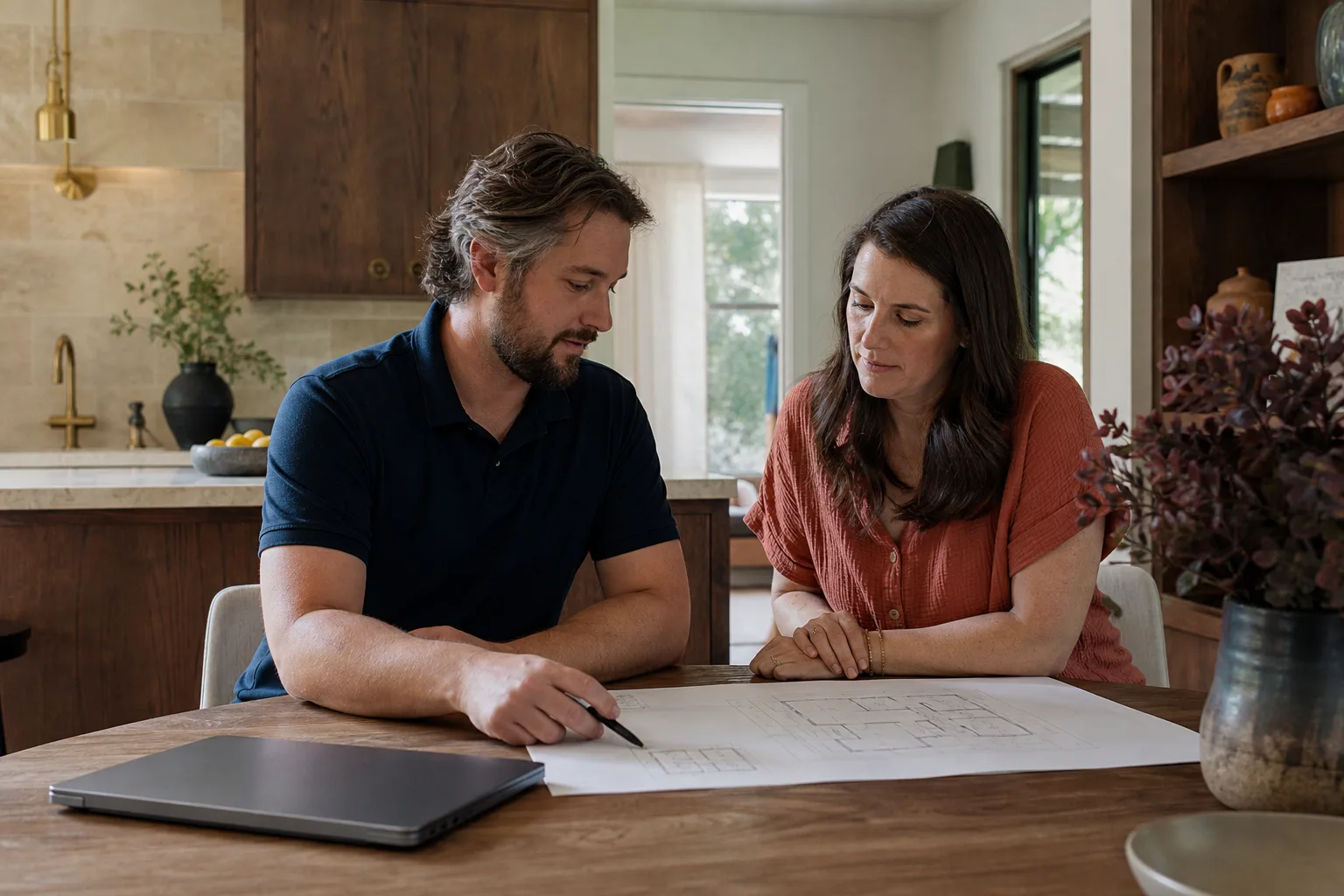
This applies to every Cover model currently shipping, including the Cover S, Cover 1, Cover 2, and the larger Cover 3 configurations. The design-and-permit package we build is keyed to your unit’s factory spec sheet, not to a generic ADU template. The compatibility point most owners miss: Cover’s factory drawings show the module dimensions, but the Austin permit reviewer needs a site-specific foundation plan, grading stamp, and utility connection details that Cover’s package doesn’t always include. When those sheets are missing, the permit stalls, and the owner gets the call nobody likes.
We recommend the OEM Cover design package where it exists and matches your site. For lots with tricky drainage, floodplain adjacency, or a heritage tree within 20 feet of the build envelope, a hybrid set works better: Cover’s architectural drawings paired with a local Austin civil engineer’s site plan. We’ll walk you through which path makes sense before you spend a dollar on filing fees. We carry the same familiarity with Abodu and Dvele platform requirements, so if you’re still deciding between manufacturers, we can price the permit path for all three.
Signs Your Cover ADU Design & Permitting Is Failing
- The city kicked back your site plan with a redline comment about a drainage easement. This is the most common failure point in Austin. The reviewer found that your planned ADU sits inside or too close to a recorded drainage easement, and the permit won’t move until you submit a revised site plan or a signed encroachment acknowledgement. We’ve handled enough of these to get the revision through in one resubmission.
- Your lender paused the draw because the permit set doesn’t match the Cover factory drawing. Lenders check for a 1:1 match. If the site plan shows a U-shaped kitchen and the Cover spec sheet shows a galley, the draw stops. The fix is a corrected permit set filed as a revision, not a conversation with the bank.
- You received a “development incomplete” notice from Austin Development Services. This means missing sheets: grading plan, foundation detail, or a TDLR registration for the prefab unit. Each missing sheet adds two to three weeks of review time.
- Your contractor says they’ll “handle permits later” after the unit arrives. In Austin, that’s a red flag. Building without a posted permit inside city limits gets you a stop-work order and a daily fine. The permit needs to be issued before the Cover unit is delivered to the site.
- The tree survey shows a heritage tree within the drip line of the build footprint. Austin’s tree ordinance protects trees 19 inches in diameter or larger. You’ll need an arborist report and possibly a variance. We line up the right arborist and file the variance paperwork so the permit doesn’t die in committee.
Replacement Cost & What’s Included

The installed price for a Cover ADU design and permitting package in Austin runs $8,500 to $17,500 before city fees. That spread depends on three things: whether your lot needs a drainage easement revision, whether a tree ordinance variance is in play, and whether you’re in an area with extra development review layers like the Lake Austin watershed or a historic district overlay. City filing fees typically add $900 to $2,200 on top, depending on square footage and review type.
What’s included: measured site survey, foundation and grading plans stamped by a Texas-licensed engineer, complete permit set matched to your Cover factory drawings, all city submittals and resubmissions until issuance, and a written line-item scope so you see exactly where every dollar goes. No change orders appear at the door. The Garrison Standard covers our workmanship and filing accuracy for 365 days; if our permit set fails a review because of something we missed, we correct the filing at no charge.
| Package Line Item | Typical Range in Austin |
|---|---|
| Site survey and base map | $900 – $1,800 |
| Foundation and grading plans (stamped) | $1,500 – $3,200 |
| Full permit set matched to Cover drawings | $2,500 – $4,800 |
| City submittals, resubmissions, and review tracking | $2,200 – $4,500 |
| Drainage easement or tree variance package (if needed) | $1,400 – $3,200 |
| City filing fees (paid directly to Austin) | $900 – $2,200 |
DIY or Call Us?
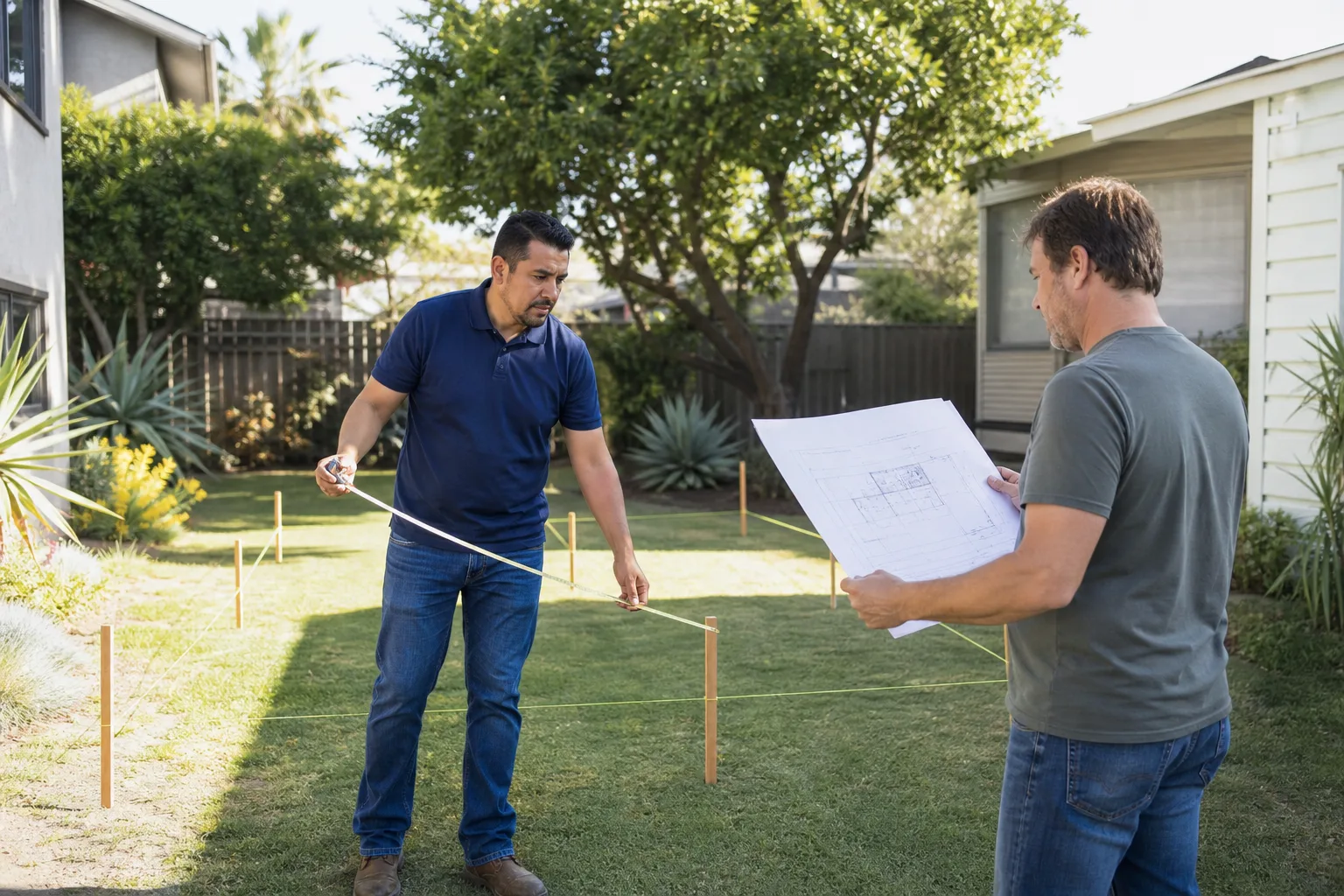
You can pull your property survey, locate your water meter and sewer cleanout, and mark the proposed ADU footprint on a copy of your lot map. That groundwork saves you an hour or two of our time, and it helps you see early if the unit fits where you think it fits. What you should not do yourself is draft the site plan, file the permit, or negotiate a drainage easement with the city. Austin’s review process is unforgiving on missing details, and a poorly written variance request can burn six months and get denied on a technicality.
There is no dangerous physical work involved in this part of the process, so the DIY risk here is not injury, it’s wasted time and wasted filing fees. A denied permit costs you the application fee and puts a denial record on the property. We’d rather you spend that money on a correct submittal the first time. If you want an honest read on whether your lot will clear Austin’s requirements before you commit to a Cover unit, call (361) 309-9568. We’ll tell you what we see, even if the answer is “this lot is going to fight you.”
FAQs
The design and permitting phase typically takes two to four weeks of actual work, but Austin’s review queues add another four to ten weeks depending on the season and whether your submittal triggers a drainage or tree commission review. A clean, complete permit set clears fastest, which is why we don’t file a submittal until every sheet is in order. Call (361) 309-9568 and we’ll give you a realistic timeline for your specific address.
Yes, in most cases. If Austin Development Services has issued a “development incomplete” or a set of redline comments, we can work from that existing application and file corrections rather than starting fresh. The exception is a formal denial, which often requires a new application and a new fee. Either way, the first step is reading the reviewer’s exact comments, and we do that with you before quoting anything.
A correction to an existing Cover ADU permit set in Austin usually takes one to three weeks to prepare and resubmit, with review time on top. If the issue is a missing sheet like a grading plan or a foundation stamp, we can often turn that around in under ten business days. The city controls the review clock, not us, and we track every submittal so nothing sits unnoticed.
We maintain a library of Austin-specific details for Cover units, including standard foundation details, utility connection diagrams, and the drainage profiles that come up repeatedly in Travis County. That library cuts design time on straightforward lots to about half of what a cold start takes. Your site-specific survey and grading plan are always custom, because no two Austin lots drain the same way.
Written by Reed Calloway, Owner, Fielding ADU Austin at Fielding ADU Austin, serving Austin and nearby areas.