Dvele Room Addition Contractor in Austin: What to Know First
Adding a room to a Dvele-built home in Austin is a different job than adding to a conventional stick-built house. The wall panels, the utility chases, the roof assembly, and the warranty trail all run through Dvele’s factory specifications, and cutting into the wrong place can void the warranty and create moisture problems. We are an independent Dvele room addition contractor serving Austin and surrounding neighborhoods like Mueller, Allandale, Tarrytown, and East Austin. We provide written pricing before any work starts, and every addition is covered by the Garrison Standard: a full year of written guarantee on workmanship, with a free second visit if something fails. If you own a Dvele home in Austin and you’re planning a room addition, call (361) 309-9568 and we’ll walk through your plans and give you a straight answer.
How Dvele Products Fail – and How We Fix Them
Dvele homes are engineered systems, not conventional framing. When a room addition goes wrong on a Dvele house, it’s almost always one of these five failure points. We see them repeatedly in Austin’s heat and humidity.
- Mismatched panel joints at the tie-in. Dvele builds with precision factory tolerances, often under 1/8-inch variation. A typical framing crew working to standard site-built tolerances will leave gaps at the connection point between the existing Dvele wall and the new addition framing. That gap becomes an air and moisture leak. We shim, flash, and seal the tie-in to match the original panel plane, then water-test the connection before we close it up.
- Steel-frame thermal bridging at the connection. Dvele walls use dense-packed insulation and continuous exterior insulation for a tight thermal envelope. If the addition is conventionally framed and simply butted against the Dvele wall, the connection point conducts heat. In August, you’ll feel warm air bleeding through the wall. We match the assembly where it meets the original structure and install a thermal break so the new room doesn’t create a hot spot.
- Warranty-voiding roof penetrations. Dvele’s roof assembly includes a continuous air and water barrier. Cutting vents, skylights, or new mechanical penetrations without sealing to the correct substrate breaks that barrier. We trace the existing barrier detail before cutting, flash to the original membranes, and document the work so your Dvele warranty stays intact wherever the original material is untouched.
- Utility chase conflicts in the floor system. Dvele home lines that run plumbing and wiring through factory-built floor cassettes leave little room for error when you tie in a new room’s drainage or electrical. Drilling into the wrong chase means opening the floor. We map the existing runs with a scope before we lay out the new utility path, which is faster and cheaper than guessing and patching.
- Moisture at the foundation connection. Austin’s clay soil expands and contracts. Dvele homes sit on engineered foundations that manage that movement. When a room addition gets its own slab or pier system without accounting for differential movement, the joint between old and new structure cracks. We specify the connection detail based on the existing foundation type and the soil report for the lot, not a generic detail from a plan book.
Our Dvele Room Addition Contractor Process
Every Dvele room addition we build in Austin follows the same sequence. No skipped steps, no surprises at the end.
- 1
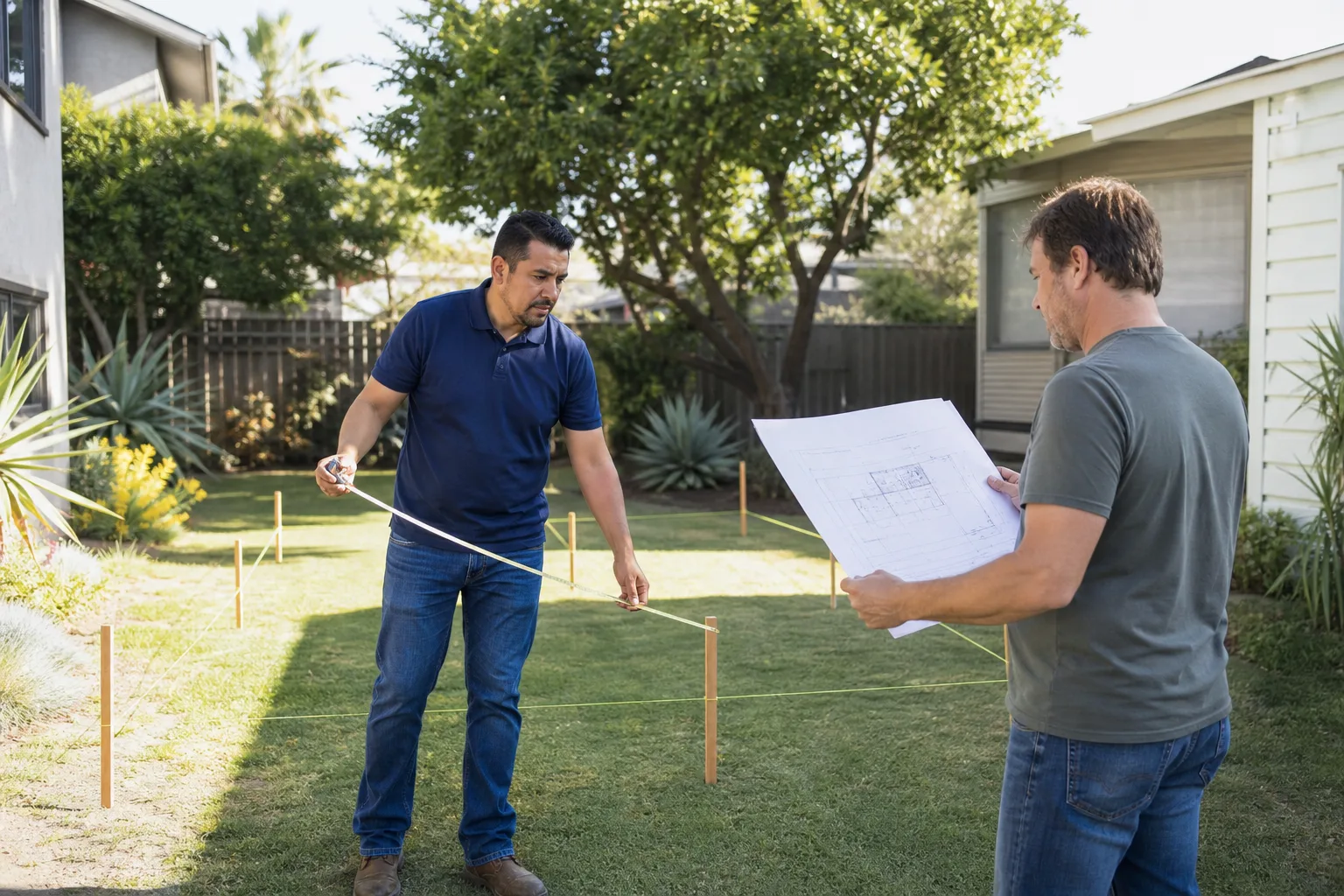
Walk the house and the plans. We inspect the existing Dvele structure, locate the tie-in point, and check the foundation, the wall panel type, and the roof assembly. If you have the original Dvele construction documents, we use them. If not, we scope what we need.
- 2
Write the scope and the price. You get a written line-item quote before any work begins. That price covers the permit drawings, materials, labor, and the tie-in details specific to a Dvele structure. The number you approve is the number on the final invoice.
- 3
Pull permits and build by the book. Austin’s Development Services Department has specific requirements for additions to prefabricated structures. We file the plans, mark up the tie-in details, and bring the building inspector through at the required stages. No open permits, no skipped inspections.
- 4
Build the tie-in to factory tolerance. The crew working on your Dvele addition is background-checked, uniformed, and trained on prefab construction methods. We do not send a rotating cast of subcontractors who have never touched a Dvele panel.
- 5
Test the connection. We water-test roof flashings, pressure-test where practical, and check the thermal envelope at the tie-in with an infrared camera before drywall goes up. If the connection isn’t tight, we fix it before it is hidden.
- 6
Clean up and hand over the guarantee. The site is swept, the materials are gone, and you get the Garrison Standard in writing: one full year, if anything fails, we return and correct it at no charge.
What Dvele Room Addition Contractor Costs in Austin
Plan on a real number before you call. A simple single-room addition tied into a Dvele home in Austin typically runs $185 to $265 per square foot for the construction work itself, before permit fees, drawings, and finishes. A 300-square-foot bedroom addition lands somewhere between $55,000 and $80,000 in most Austin neighborhoods. The costs that move the number fastest are the tie-in complexity, whether your existing Dvele wall assembly requires a structural engineer’s stamp, and the foundation condition at the connection point. Every Austin lot has its own soil story. We will give you a written quote that says exactly what you’re paying for, and the final invoice will match the quote. Call (361) 309-9568 and we’ll put the numbers in writing.
Why Austin Homeowners Call Fielding ADU Austin for Dvele Work
We are an independent Dvele room addition contractor, not a franchise that got handed a training manual. Reed Calloway, who leads our Austin operation, learned the trade at Los Angeles Trade-Technical College and has been building and finishing residential structures for nearly two decades. That matters when your house is a factory-built Dvele and the tie-in has to be perfect the first time. We also work regularly with Abodu and Cover prefab platforms, which means our crews read factory specs as a habit, not an exception. Every person on your job site is background-checked and wears a uniform you can identify from the street. Every call to (361) 309-9568 is answered by a live person, any hour of any day. And every Dvele room addition we build carries the written one-year guarantee we’ve been standing behind since Garrison Partners set the standard in 2006. Put it in writing, then do what it says.
FAQs
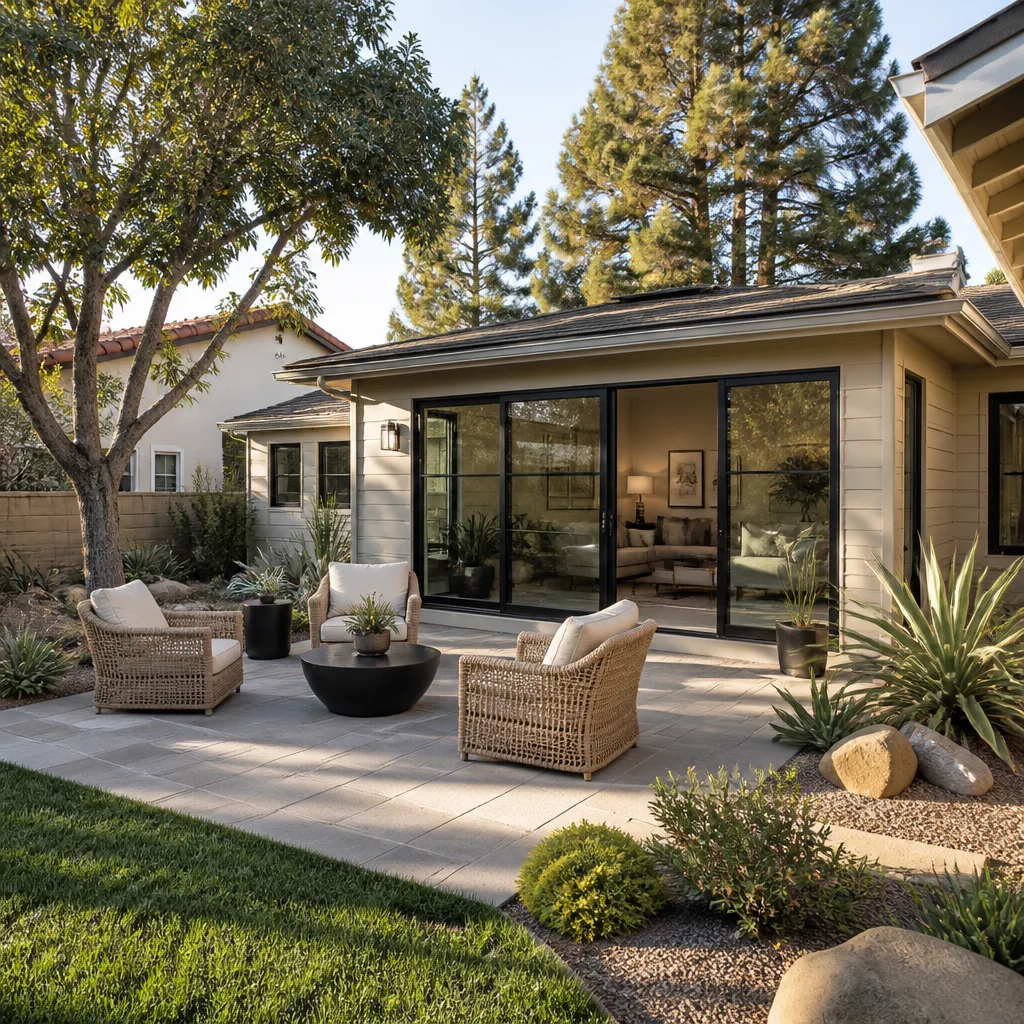
It can, if the addition is tied in wrong. The original Dvele materials and systems that are not modified generally stay under warranty, but any area where the addition cuts into the original structure becomes your responsibility, and sloppy tie-in work can create failures that Dvele will not cover. We match the existing assembly and document every connection so the untouched portions of your home remain unambiguously warrantable. Call (361) 309-9568 and we’ll explain exactly where the warranty line falls on your specific plan.
In most cases we can build a wall assembly that matches the thermal and structural performance of a Dvele panel, using conventional materials like James Hardie siding and dense-packed insulation. The tie-in point is where the work has to be right, and that is the part we focus on. The new room will perform like part of the same house, not like a tack-on.
Plan on eight to fourteen weeks from permit filing to final inspection for a typical single-room addition, depending on the size and the foundation condition. Austin’s permitting schedule moves at its own pace, and we do not promise construction timelines that assume the city works faster than it does. We will give you a schedule in writing and tell you if anything changes.
Sometimes, and we’ll tell you after the first walk-through. If the addition connects to a load-bearing Dvele wall or the roof assembly, an engineer’s stamp is often required by Austin’s building department. We do not skip that step, and the cost of the engineer is included in your written quote when it is needed.
If a workmanship defect shows up within one full year, we come back and fix it at no charge. That is the Garrison Standard, and it is in writing before we start. Most contractors in Austin won’t put that sentence on paper. We’ve been doing it since 2006.
Written by Reed Calloway, Owner, Fielding ADU Austin at Fielding ADU Austin, serving Austin and nearby areas.