Boxabl Site Prep & Utilities: The Austin Owner’s Guide
Site prep and utility installation for a Boxabl Casita in Austin typically runs $18,000 – $45,000 depending on your lot’s slope, soil, and distance from the street. We stock and install the Boxabl-compatible components that make the difference between a unit that clicks into place and one that fails inspection. Most Austin owners discover prep problems the hard way: the crane day arrives, and the foundation anchors are 2 inches out of square, or the electrical service is 50 amps short of what the Casita pulls on a July afternoon.
This page covers exactly what goes into Boxabl site prep in Austin, what it costs, and what fails first. If you’re staring at a failed foundation, a utility stub that won’t pass City of Austin inspection, or a flatwork problem that showed up after the unit was set, you’re in the right place.
Which Boxabl Models This Applies To
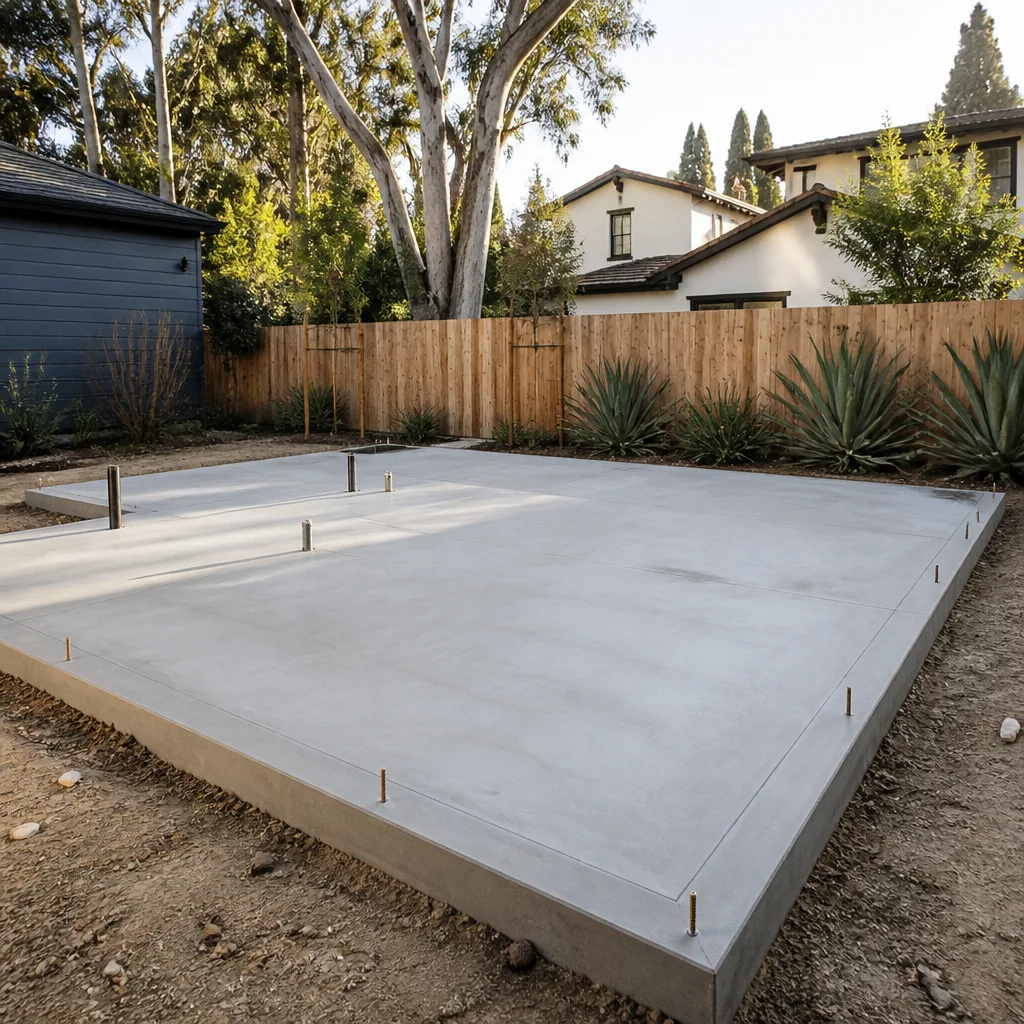
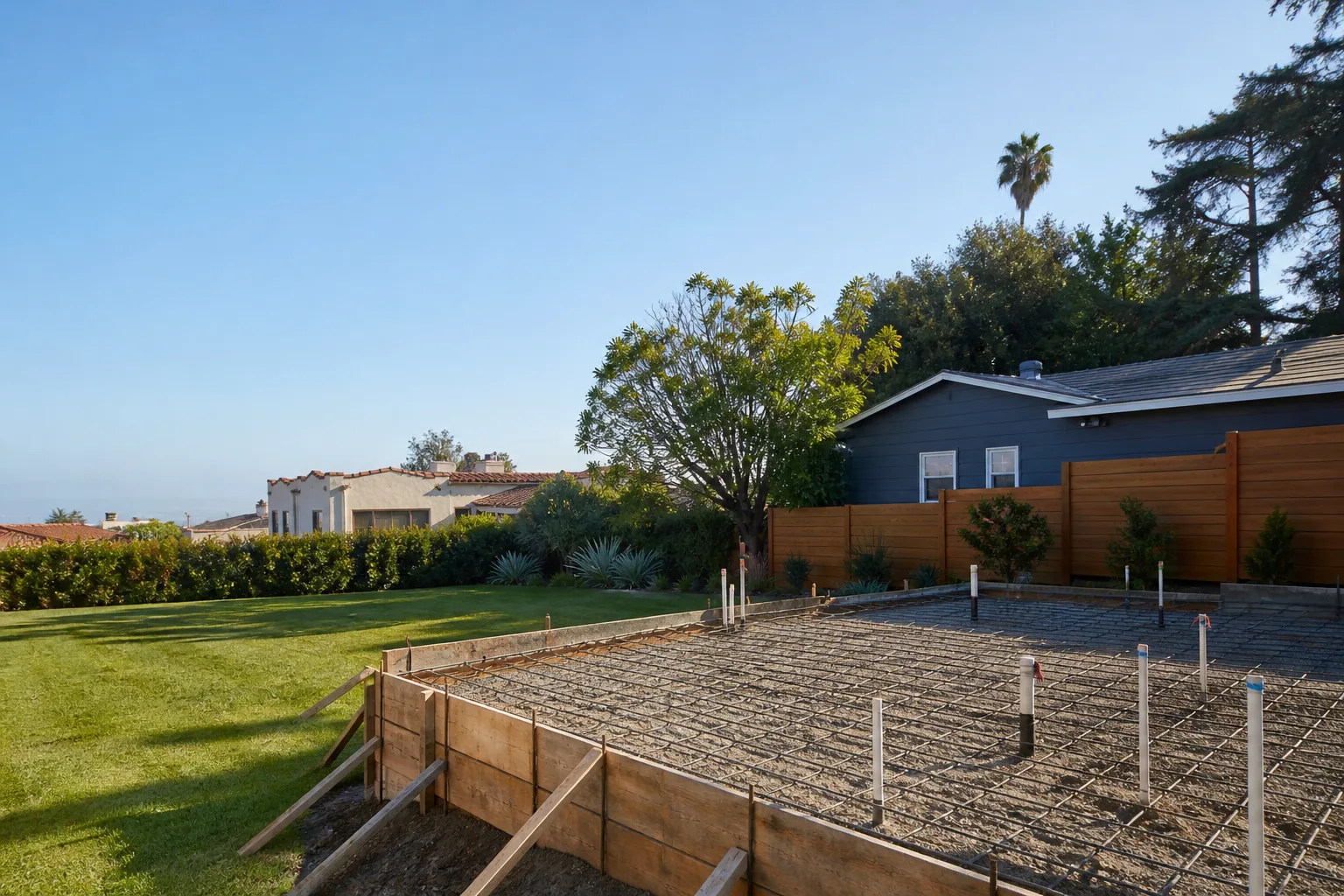
The site prep and utility requirements we’re describing apply to the Boxabl Casita, the company’s 375-square-foot folded structure. That’s the model currently shipping to Texas owners and the one we see most often on Austin lots. The Casita sits on a specific 19-by-19-foot 4-inch reinforced concrete pad with embed plates anchored at precise coordinates. If you’re looking at a Casita, the specs are not a suggestion: Boxabl’s engineering calls for anchor bolt patterns and utility stub locations that are factory-specified. Get the pad 3 inches off, and the crane crew won’t set the unit.
One compatibility point worth naming: Fielding ADU Austin is an independent service provider, not affiliated with Boxabl. What that means in practice is we’ve done enough of these in Austin to know where the factory specs meet local code and where the two collide. We also work with Abodu, Cover, and Dvele, so if you’re comparing platforms, we can tell you honestly which prep approach fits your lot and budget.
Identifying your exact part situation starts with Boxabl’s site plan and spec sheet. The embed plate spacing and utility stub locations are printed on the engineering documents. If you don’t have those documents, take photos of the pad, the anchors, and the stubs from multiple angles, and call us. We can usually tell within a 15-minute conversation what you’re working with.
Signs Your Boxabl Site Prep & Utilities Is Failing
- Foundation pad cracks wider than 1/8 inch near the anchor points. Austin’s clay soil expands and contracts with moisture swings, and a slab that wasn’t reinforced properly or poured on uncompacted fill will crack at the stress points, usually the embed plates. Once the anchors lose their grip, the unit’s load path is compromised.
- Electrical service that trips when the mini-split and water heater run together. The Casita pulls more than people expect, especially in August. If your service is under 100 amps or your panel is undersized, you’ll see the main breaker trip on hot afternoons. The utility requirement is not a suggestion.
- Sewer line that backs up within the first year. In Austin’s clay, a poorly bedded PVC line can deflect or crack as the soil shifts. If you’re hearing gurgling in the Casita’s bathroom or smelling sewer gas near the stub, the line has likely separated at a coupling.
- Water pressure drops to a trickle when the irrigation system kicks on. If the water stub was undersized or the supply line wasn’t run deep enough, you’ll feel it inside the unit. Most Austin lots need a 1-inch line to the Casita, not the 3/4-inch line some crews run to save a few dollars.
- Pad sits visibly high on one corner after the first heavy rain. Improper grading or missing drainage work means water pools against the slab edge, erodes the soil, and the pad starts to settle unevenly. You’ll see the door bind or the unit feel off-level.
Replacement Cost & What’s Included
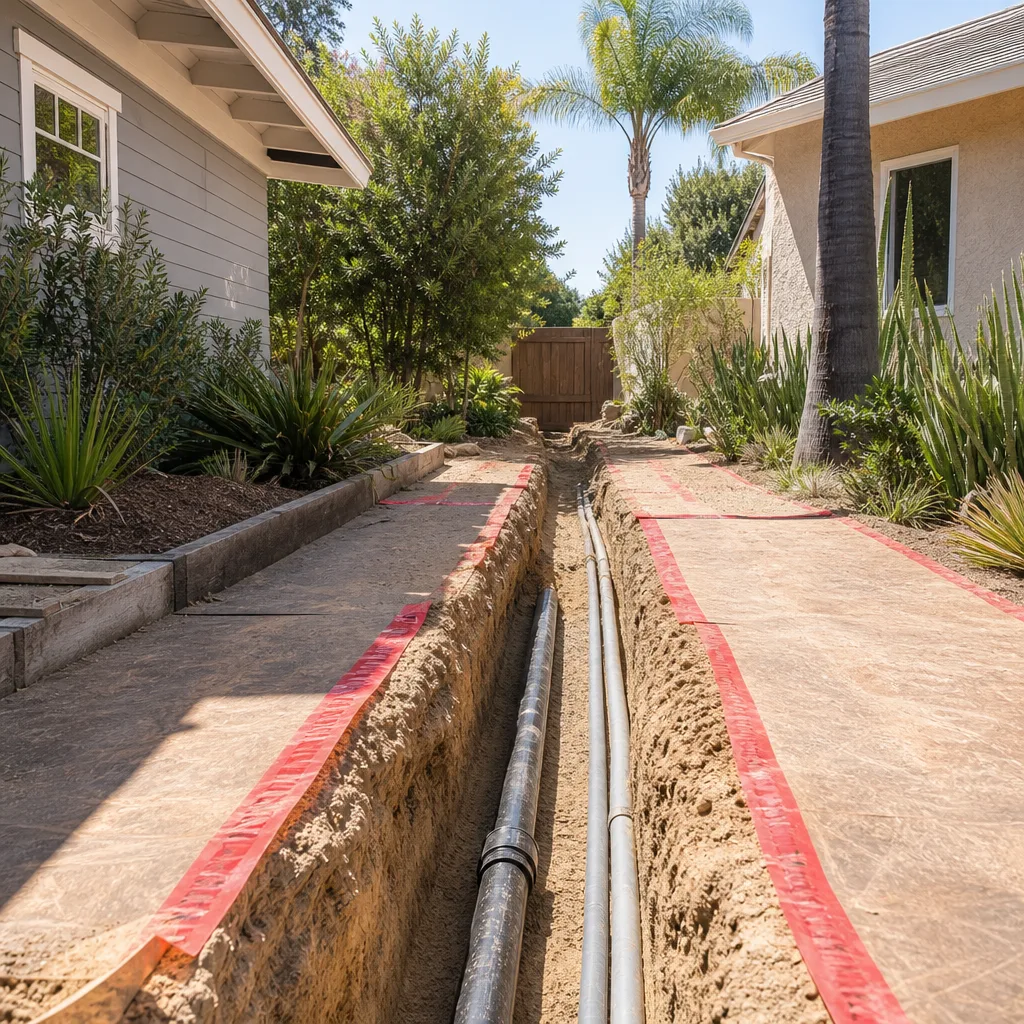
Here’s what Boxabl site prep and utility work actually costs in Austin, based on the work we’ve priced and completed in neighborhoods from South Congress to Leander:
- Basic site prep on a flat, accessible lot: $18,000 – $25,000. This includes clearing, grading, the 4-inch reinforced pad with embed plates, and utility stubs brought from the street to the pad edge.
- Sloped or rocky lots: $28,000 – $38,000. Austin’s west side eats time and money here. Retaining work, piering, additional fill, and compaction testing all add cost.
- Long utility runs (more than 75 feet from street to pad): add $4,000 – $9,000 per utility. Trenching in rock, crossing existing landscaping, or boring under driveways drives this higher.
- Failed pad repair or re-pour: $8,000 – $16,000 depending on how much concrete has to come out and what the soil underneath requires.
Every price we give is written and itemized before work starts. That’s the Garrison Code, and it’s how we’ve operated since 2006 when the parent organization behind Fielding ADU Builders, Garrison Partners, started holding everything to a standard that includes payment terms in writing, no change orders without a signed addendum, and a full 365-day written guarantee on workmanship.
The 365-day guarantee covers the work we do. If something we installed fails inside that year, we return at no charge and correct it. Put it in writing, then do what it says.
DIY or Call Us?
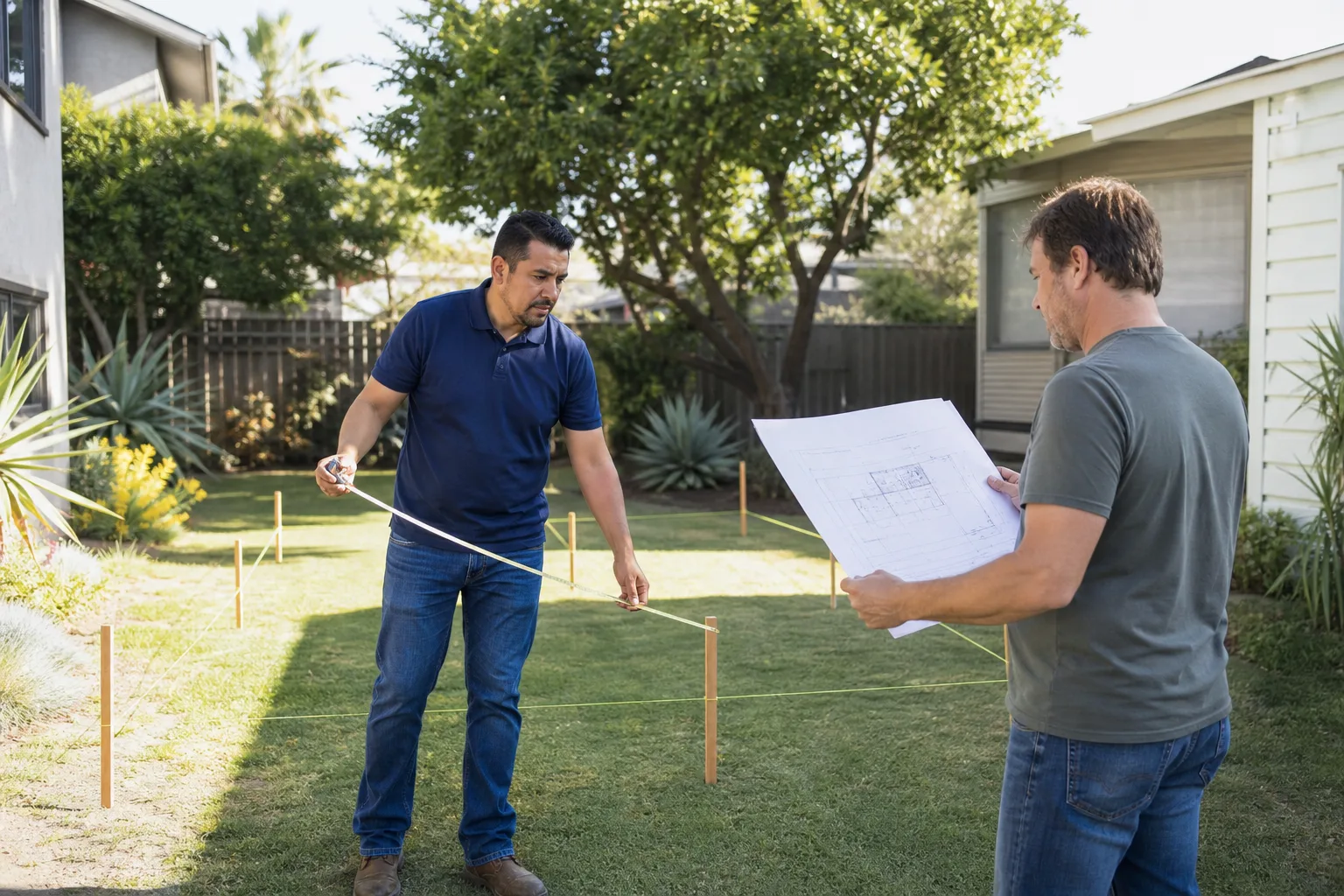
Some parts of site prep an owner can handle safely. You can mark out the pad location with stakes and string. You can verify utility depths with 811, which the city requires before anyone digs. You can check that your panel has room for the double-pole breaker the Casita needs. Those are homeowner-level checks, and they’re worth doing.
What’s not DIY-friendly: setting embed plates to within an eighth of an inch, pouring a slab that will actually hold the unit, running a sewer line that won’t separate, and pulling the electrical permit that City of Austin Development Services will inspect. Those jobs are concrete, copper, and PVC. Get any of them wrong, and the fix costs more than doing it right the first time.
If your site prep has already failed, call us at (361) 309-9568. We’ll look at your pad, your stubs, your panel, and give you a written price to make it right. No charge for the estimate.
FAQs
A properly prepared Austin pad with correct drainage and reinforced concrete should last the life of the structure, 30 years or more. Failures we see are almost always traceable to skipped compaction or undersized utilities, not normal wear. Call (361) 309-9568 and we’ll tell you what you’re actually looking at.
Sometimes. A cracked pad corner can occasionally be reinforced with piers, and a separated sewer coupling can be excavated and re-sleeved. But if the embed plates have moved or the slab has settled more than an inch, repair buys you time, not a fix. We’ll give you a straight answer, either way.
A utility or anchor repair usually takes 2 – 4 days including inspection. A full re-pour is 7 – 10 days including demolition, forming, curing, and the City of Austin inspection. You’ll have a schedule in writing before we start.
Yes. We keep the common Boxabl-spec anchor bolts, embed plate templates, and utility stub materials on hand in Austin. What we don’t stock is ordered same-week from our local suppliers, not drop-shipped from out of state.
If you have a Boxabl on the way or a Casita already in the ground with a prep problem, call (361) 309-9568. Reed Calloway and the Fielding ADU Austin crew have been working Austin lots for years now, and we’ll tell you what’s wrong, what it costs, and put it in writing before we touch anything.
Written by Reed Calloway, Owner, Fielding ADU Austin at Fielding ADU Austin, serving Austin and nearby areas.