Tuff Shed Site Prep & Utilities: The Austin Owner’s Guide
Site prep and utility runs for a Tuff Shed in Austin typically cost $1,800 to $6,500 installed, depending on whether you need a gravel pad, a concrete slab, or a trench for power and water. Most owners discover the problem the same way: a back corner of the shed has settled two inches after a wet spring, a door rubs, or the breaker trips every time they plug in a saw. We stock and install the site prep materials and utility components that match Tuff Shed’s installation specs, and we price the whole job in writing before we move a single yard of dirt.
We are an independent service provider, not affiliated with Tuff Shed itself. That means we match their spec sheets without being bound to one supplier’s parts counter. Reed Calloway and our crew have prepped dozens of Tuff Shed sites across Austin, from the clay-heavy lots in Pflugerville to the limestone ledges west of Mopac.
Which Tuff Shed Models This Applies To
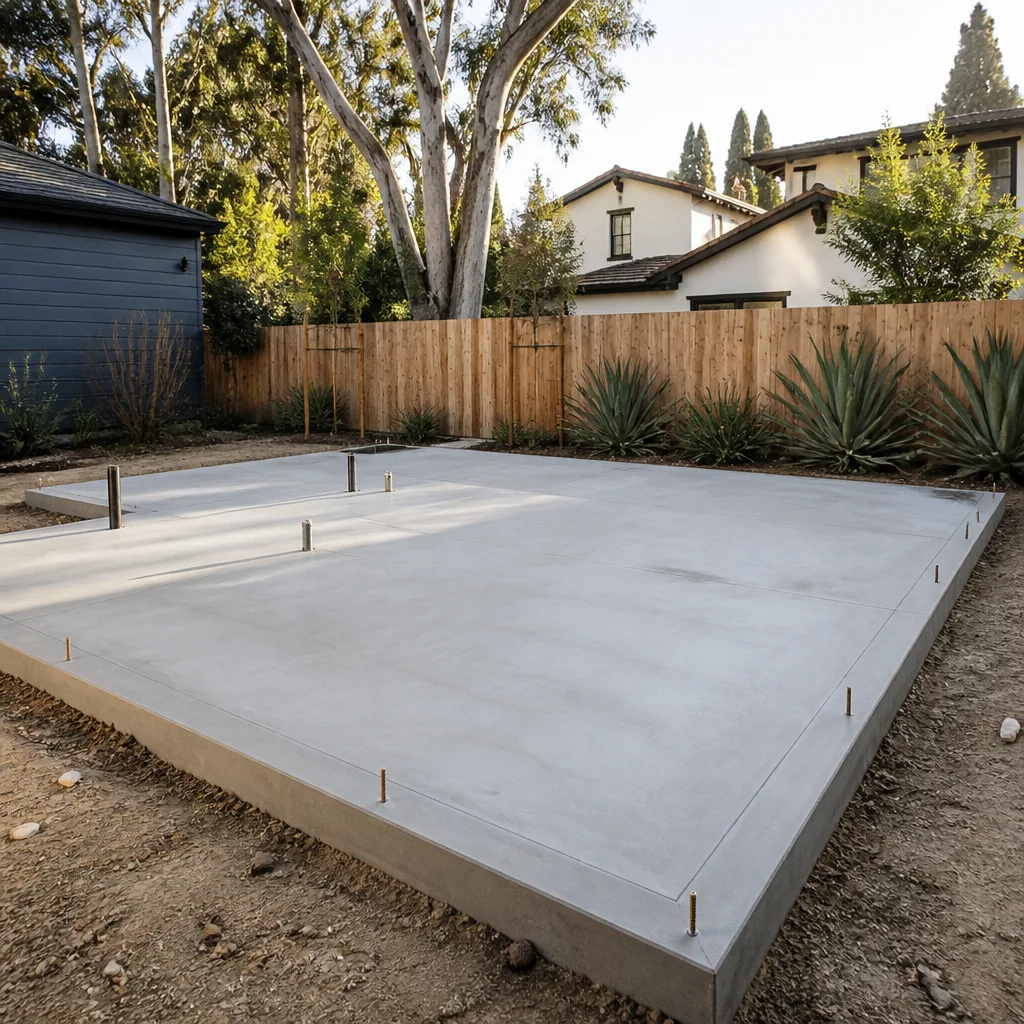
Tuff Shed’s site requirements vary by line, and the wrong base voids the installation warranty. The Premier Pro and Premier Tall Barn lines typically sit on concrete slabs or Tuff Shed’s proprietary metal base. The Sundance and Ranch series more often go on compacted gravel or pier-and-beam setups. If you bought through a big-box installer, the “site prep included” package often means a thin gravel pad that washes out in two Austin flash-flood seasons. That is the most common fail point we correct.
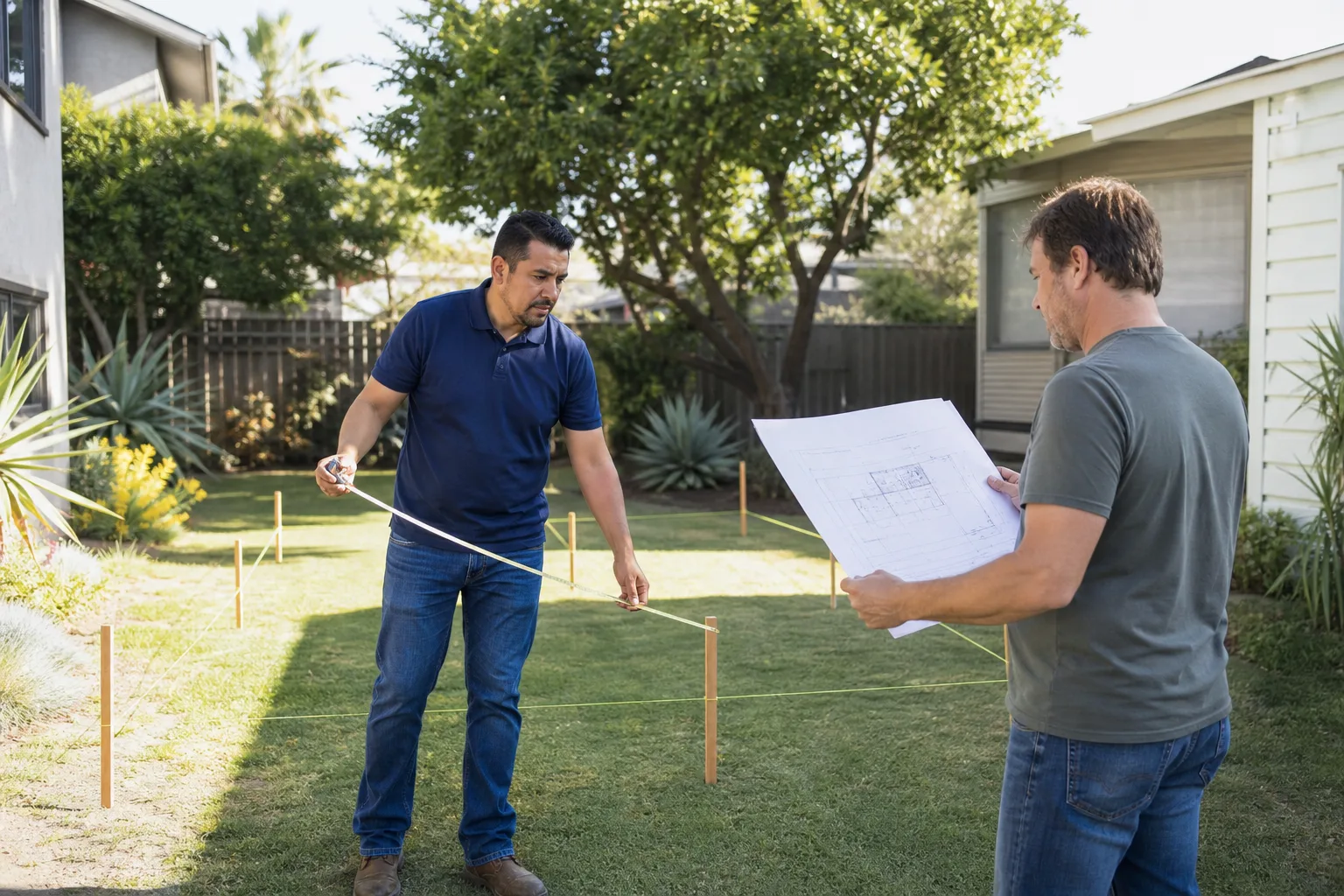
To match parts correctly, we need the shed’s model number, which is printed on the metal tag inside the door jamb, plus the slab or base dimensions on your original order. The critical measurement we verify is the base footprint: a Premier Pro TB-800 needs a prepared pad at least 8 inches larger than the shed on every side, and Austin’s building code requires a minimum 4-inch thick slab with 3,500 psi concrete for anything with electrical service. The OEM-vs-aftermarket decision matters less here than it does for doors or hardware; what matters is the concrete mix, the vapor barrier, and the compaction under the pad. We spec those to Tuff Shed’s requirements, not to the cheapest bid in the yard.
Signs Your Tuff Shed Site Prep & Utilities Is Failing
- Doors that stick or drag. When a door rubs against its frame at the top corner, the shed has settled unevenly. Austin’s expansive clay soil shrinks and swells, and a gravel pad that was adequate in the Panhandle does not hold up here.
- Water pooling at the corners after rain. The base is no longer shedding water. Over time, trapped moisture rots the bottom plate of the shed and invites termites, which cost more to remediate than a new base ever would have.
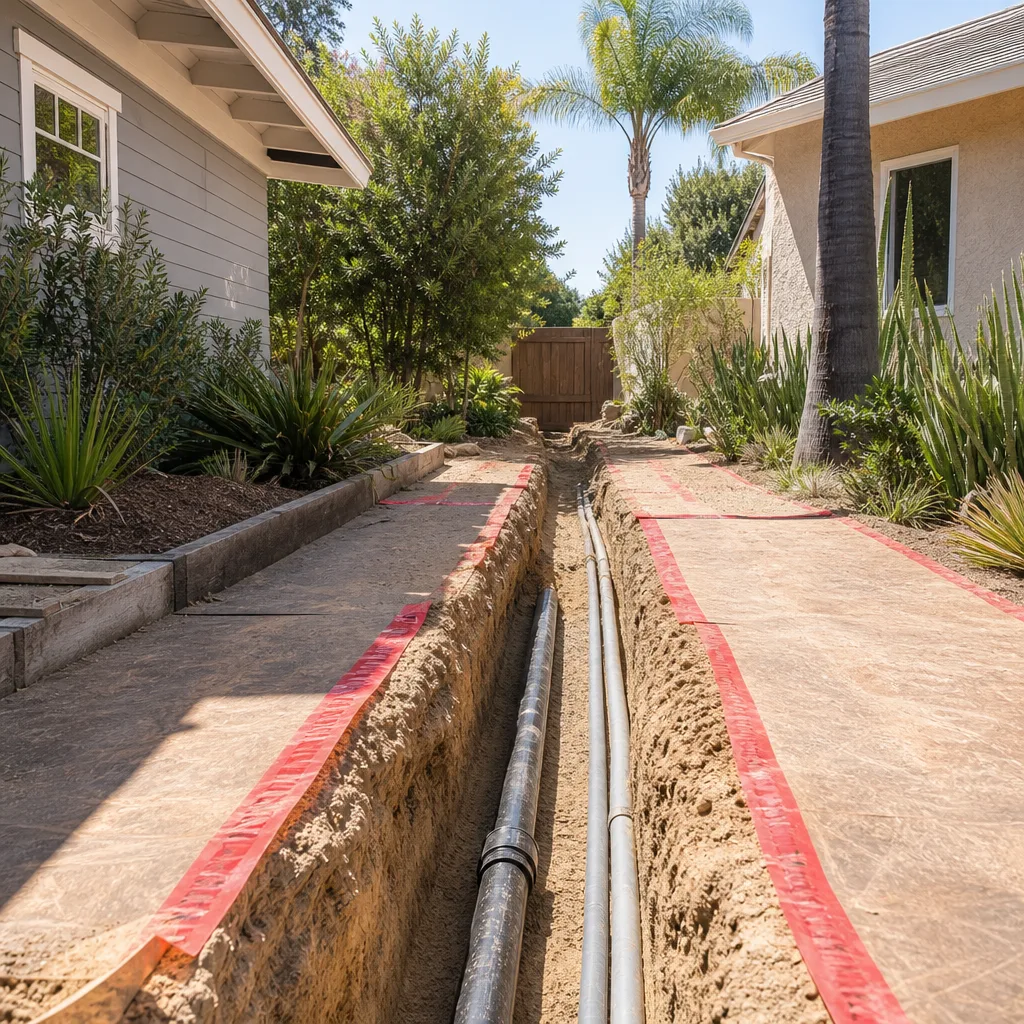
- Tripped GFCI or dead outlets. Underground conduit that was not buried to the 18-inch minimum depth required by Austin Code, or run without a weatherhead, takes on water and shorts out. We see this on roughly a third of the “prewired” sheds we are called to fix.
- Visible cracks in the pad wider than a quarter inch. That is a subgrade failure, not surface wear. The crack usually traces back to insufficient compaction or missing rebar along the perimeter.
- Pest entry at the base. Rats and fire ants exploit gaps where the shed bottom plate no longer meets the pad. The fix is releveling and sealing, not bait stations.
Replacement Cost & What’s Included
Here is what Austin homeowners should expect to pay, installed:
- Compacted gravel pad replacement (no utilities): $1,800 – $3,200, depending on shed footprint and whether the old base needs excavation.
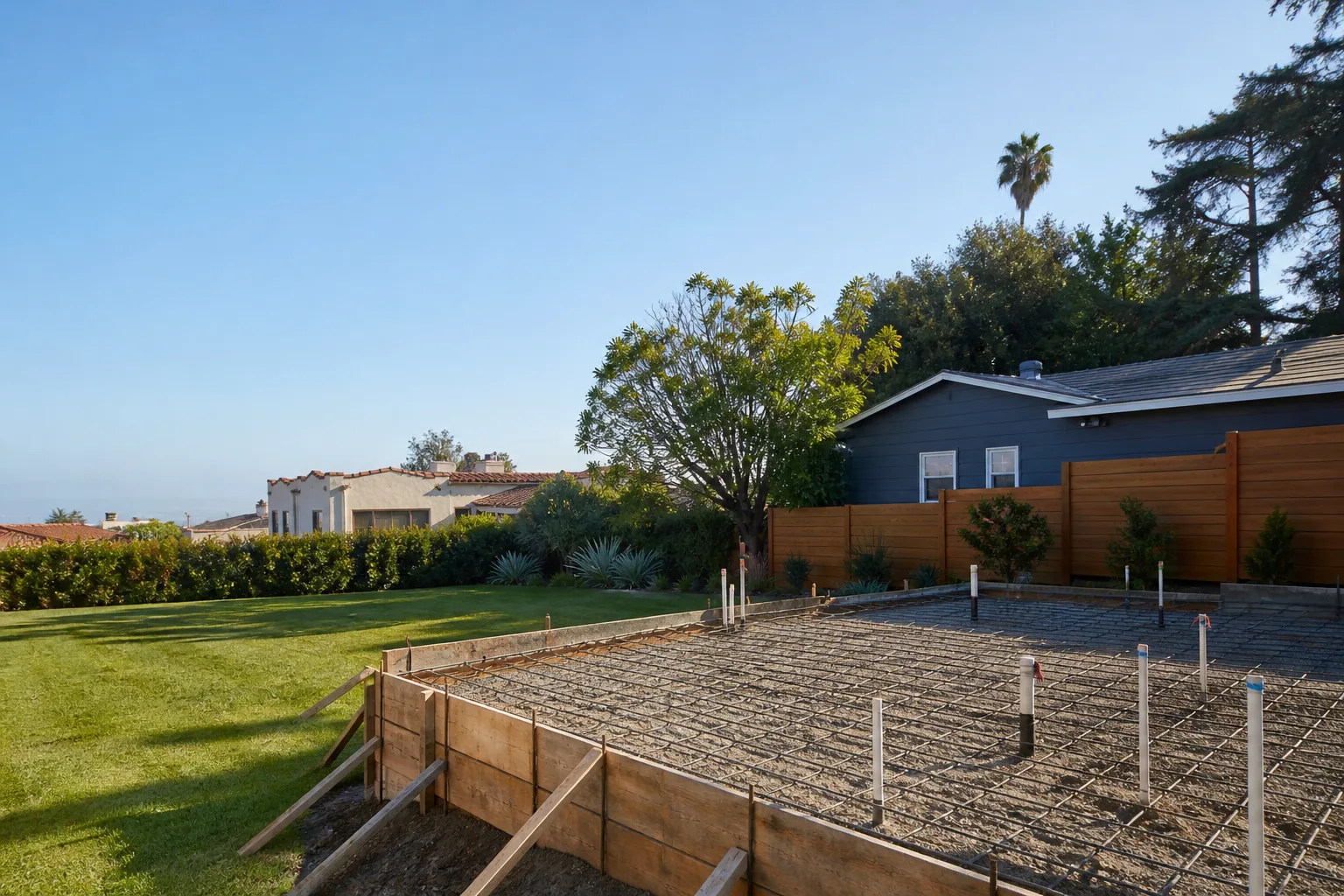
- Concrete slab pour to Tuff Shed spec, 4-inch thickness with rebar and vapor barrier: $3,800 – $6,500 for standard shed sizes up to 12×24.
- Utility trench and rough-in for a subpanel, two outlets, and an exterior light: $2,200 – $4,500, depending on distance from the existing panel and whether we are cutting through limestone.
The range reflects two things: the condition of what is already in the ground, and whether the city requires a permit on the electrical portion. On most Austin residential lots, a shed subpanel counts as “supplemental power” and does need a permit. We pull the permit, schedule the inspection, and stand there when the inspector walks it. The written price covers parts, labor, and permit fees, and the work is covered by our one-year Garrison Standard guarantee.
DIY or Call Us?
You can safely inspect a settling shed yourself. Look at the corners. Look at the gap between the bottom plate and the pad. Run a garden hose at the base and watch where water goes. What you should not do is run electrical from the house yourself. Underground service in Austin has to be buried at the correct depth, marked before digging, inspected before backfill, and landed in a panel. We have corrected enough homeowner-wired sheds to know that a missed ground or undersized breaker is the difference between a working shop and a fire. If you are just releveling on gravel, that is a weekend job. If utility work is involved, call us at (361) 309-9568 and we will give you a written price, same visit.
FAQs
A properly prepped concrete pad with a vapor barrier and good compaction should hold its level for 20-plus years in Austin; a thin gravel base typically needs releveling within 3 to 5 seasons of clay expansion. Call (361) 309-9568 and we can tell you which category your pad is in with one visit.
Yes, if the slab is structurally sound and only settled, we can foam-jack or shim and reseal it for roughly half the cost of a new pour; if the cracks are structural, replacement is the cheaper long-term fix. We will give you both numbers in writing before you choose.
Most Tuff Shed site prep jobs run 2 to 3 days from form set through concrete cure, and a simple utility run adds one day plus inspection. We schedule inspections with the city ourselves, and you will have a clear completion date on the written quote.
We stock the standard gravel, concrete, rebar, vapor barrier, conduit, panels, and breakers on our trucks, and we source Tuff Shed-specific base components directly when the model calls for them. You never run parts to the job; that is our problem.
We work with those modular and prefab platforms as well, and the site prep and utility expectations are similar: a level, load-rated base and properly permitted power and water. Tell us which platform you are on and we will spec it to their engineering documents, not to a generic residential code minimum.
Written by Reed Calloway, Owner, Fielding ADU Austin at Fielding ADU Austin, serving Austin and nearby areas.