Site Assessment in Austin, TX
A site assessment for an ADU in Austin tells you whether your lot can actually support the unit you have in mind before you spend money on design or permits. It covers setback limits, tree and heritage tree rules, utility access, slope, soil, drainage, and the floodplain and watershed restrictions that make Austin different from almost any other Texas city. At Fielding ADU Austin, we treat the site assessment as the first real construction document, not a drive-by opinion, because the wrong assumption about a lot costs more than any other mistake in the process.
We are the ADU and room-addition arm of the Garrison Partners family, which has been building to The Garrison Standard since 2006. The assessment is where we apply that standard first: show up in the window, put findings in writing, and tell you straight what your land will allow. For help deciding whether an ADU is even right for your property, start with our full ADU Design & Permitting in Austin guide, or call us at (361) 309-9568 to schedule a walkthrough.
When You Need Site Assessment
Not every homeowner needs a formal site assessment on day one. Some lots are wide-open suburban rectangles with no protected trees and no drainage drama, and the answer is obvious. The problem is that Austin contains very few lots like that. Most are in neighborhoods where a 40-year-old oak, a creek buffer, or a 1960s easement changes the math completely. Here are the situations where a site assessment is not optional.
- Your lot is in a floodplain or near a creek. Austin sits inside Flash Flood Alley, and the city enforces floodplain and Critical Water Quality Zone rules with real teeth. If your backyard slopes toward a creek or ditch, a site assessment tells you what can be built and where before you commit to a floor plan.
- You have mature trees within 30 feet of the planned footprint. Austin protects certain trees by ordinance, including heritage trees over 24 inches in diameter. Removing or damaging one without a permit carries fines that can exceed the cost of the ADU itself. We map every protected tree during the assessment.
- Your lot is smaller than 7,000 square feet. Small lots in neighborhoods like Crestview, Brentwood, or parts of South Austin often run out of buildable room once setback, lot-coverage, and impervious-cover limits are applied. The assessment is where you find out whether the 800-square-foot ADU you want actually fits, or whether it needs to be 650.
- You have a steep grade anywhere on the property. A lot that drops more than a few feet across the ADU footprint changes foundation work, drainage design, and price. Slopes of 15% or more trigger additional engineering in Austin. We measure it, not guess it.
- You are looking at a prefab or modular ADU. Platforms like Abodu and Cover have specific site requirements for crane access, foundation tolerances, and utility placement. A site assessment confirms your lot matches the platform’s assumptions, which prevents a canceled delivery.
- You have already had a contractor tell you about a permit that “will be fine.” Austin’s Development Services Department does not issue feelings. A real assessment turns the word “fine” into a written finding with measurements and code sections attached.
Our Site Assessment Process
The assessment follows a set sequence, and you get a written report at the end. There is no optional step and no part we skip to save an hour, because every one of these items has killed or reshaped an ADU project in Austin. Here is the order of work.
- We start with city records and overlays. Before anyone sets foot on your lot, we pull the zoning, floodplain, watershed, and overlay maps from the city and county. Minutes spent here answer questions a site walk alone never could, like whether your property falls within a neighborhood conservation district or the McMansion ordinance boundary.
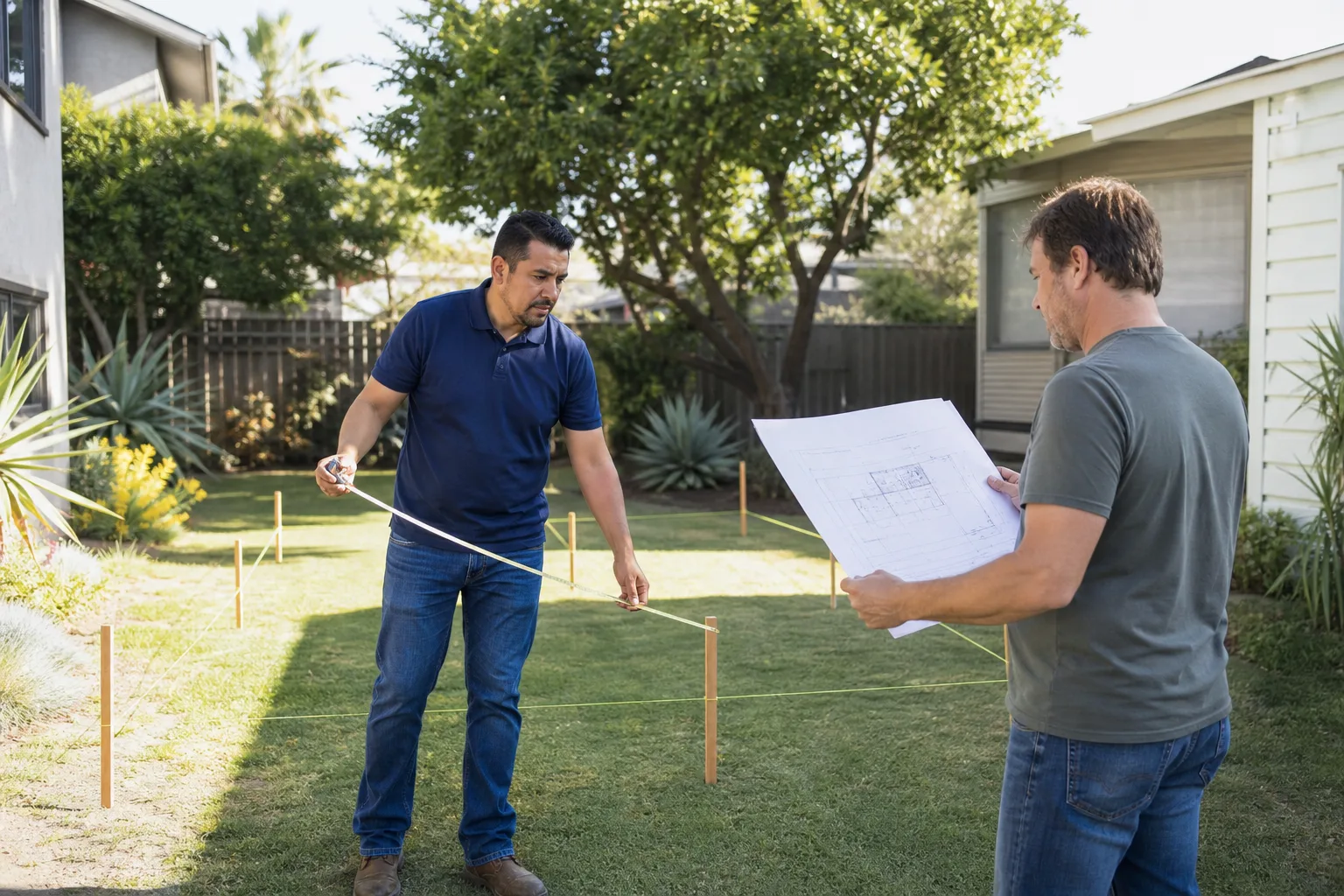
- Reed Calloway walks the property with you. We map the existing structures, fences, easements, utility lines, trees, and any visible drainage patterns. We measure the actual buildable area, not the area that looks buildable from the back patio.
- We check setbacks and lot coverage against the current code. This is where trades terms meet plain language. A setback variance is the city’s written permission to build closer to the property line than the standard rule allows. We check whether you even need one, and whether you have a realistic case to get one.
- We confirm utility access and connection points. Water, sewer, electric, and gas connections all have distance and depth requirements. An ADU 40 feet from the main house may need its own sewer tap, which changes the budget on the spot. We locate the points and measure the runs.
- We test for the Austin-specific drainage question. Because Austin sits in a flood-prone region, the city asks a drainage question on almost every residential permit: where does the new impervious surface send its water? We inspect the slope, soil type, and existing drainage, and we tell you whether a rain garden, French drain, or full drainage plan will be required.
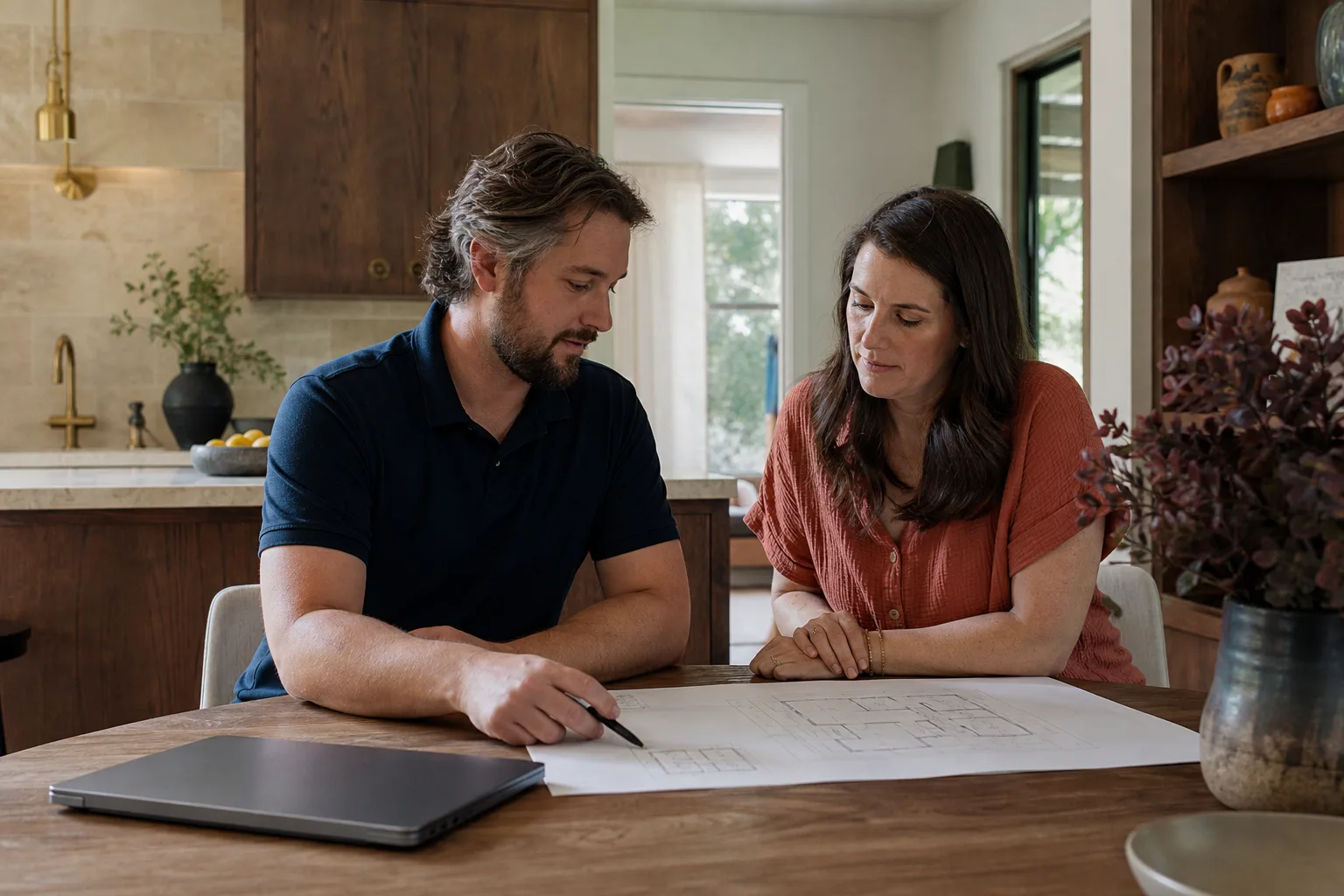
- You receive a written, itemized assessment report. The report lists findings, measurements, the specific code sections that apply, and a clear yes/no/build-with-conditions verdict on your planned ADU. The price of the assessment is in writing before we begin. The report is yours whether or not you build with us.
Everything we find is documented against The Garrison Code, the operating rule we keep across every Fielding ADU project: show up in the window, price in writing, by the book, leave it clean, stand behind it for a year. That code is why our reports read like a contractor trying to protect your money, not your wallet from a distance.

Site Assessment Pricing in Austin
In Austin, a professional ADU site assessment typically runs between $950 and $2,800, depending on the size of the lot, the number of overlays the city applies, and whether we need a survey or arborist report. A flat, quarter-acre suburban lot with no protected trees and clean zoning sits at the low end. A sloped lot in a floodplain overlay with two heritage oaks and a utility easement runs toward the higher end because the assessment has to answer more questions.
| Assessment component | Typical cost in Austin | When it is required |
|---|---|---|
| Zoning and overlay research | $150 – $350 | Every assessment |
| On-site measurements and mapping | $300 – $600 | Every assessment |
| Utility location and connection check | $150 – $300 | Every assessment |
| Arborist tree report | $250 – $700 | Protected or heritage trees on site |
| Topographic or boundary survey | $400 – $1,200 | Sloped lots or disputed boundary lines |
| Engineer soil and drainage review | $300 – $800 | Floodplain, watershed, or poor drainage |
The assessment fee is a line item with a fixed price, not an estimate, and you approve it before the work starts under our written-price-first policy. What you pay for the assessment gets credited back to your ADU build if you move forward with Fielding ADU Austin. If the assessment tells you the ADU is not viable, you are out only the assessment cost, not a stack of design and permit fees. If you are considering a garage conversion, a backyard unit, or a room addition, the assessment is the cheapest insurance on the project.
What Affects Site Assessment Cost in Austin Specifically
Austin is not Houston or Dallas. Three local factors push assessment complexity and price here more than anywhere else in Texas.
- Watershed and floodplain overlays. Austin sits across portions of the Colorado River watershed, and the city’s drainage requirements are enforced through a code that many out-of-town builders never see coming. If your lot is inside a Critical Water Quality Zone or floodplain, the assessment must cover drainage modeling, not just setback math.
- Tree protection ordinances. The city protects trees 19 inches in diameter and larger, with separate rules for heritage trees 24 inches and larger. In neighborhoods like Allandale, Rosedale, and Barton Hills, a single heritage oak can determine where an ADU sits or whether it fits at all. An arborist report becomes a required line item.
- Zoning overlays and small-lot rules. Austin’s Neighborhood Conservation Combining Districts, the McMansion ordinance, and the new small-lot ADU rules create a patchwork of buildable-area math. One block can differ from the next. The assessment has to check the specific overlay maps, not the general zone letter.
What We Check That Other Assessors Commonly Skip
Every item below has changed a project we have worked on in Austin, which is why they are in our standard report and not an add-on.
- Impervious cover limits. Austin caps the percentage of your lot that can be covered by roofs, driveways, and patios. An ADU often pushes a lot past its cap, which forces a drainage mitigation plan or a smaller footprint. We calculate this number on every assessment, because skipping it creates a permit rejection later.
- Asset line and utility trench conflicts. Older Austin neighborhoods have sewer lines that run under what looks like perfectly good ADU space. Digging into a city sewer main is not a permit problem; it is a bill. We locate and flag every conflict before design begins.
- Foundation assumptions for your chosen build method. A Tuff Shed-style structure on a gravel pad and a Cover panelized unit on a slab have completely different site requirements. We compare your lot conditions to the build method you want, not the generic one.
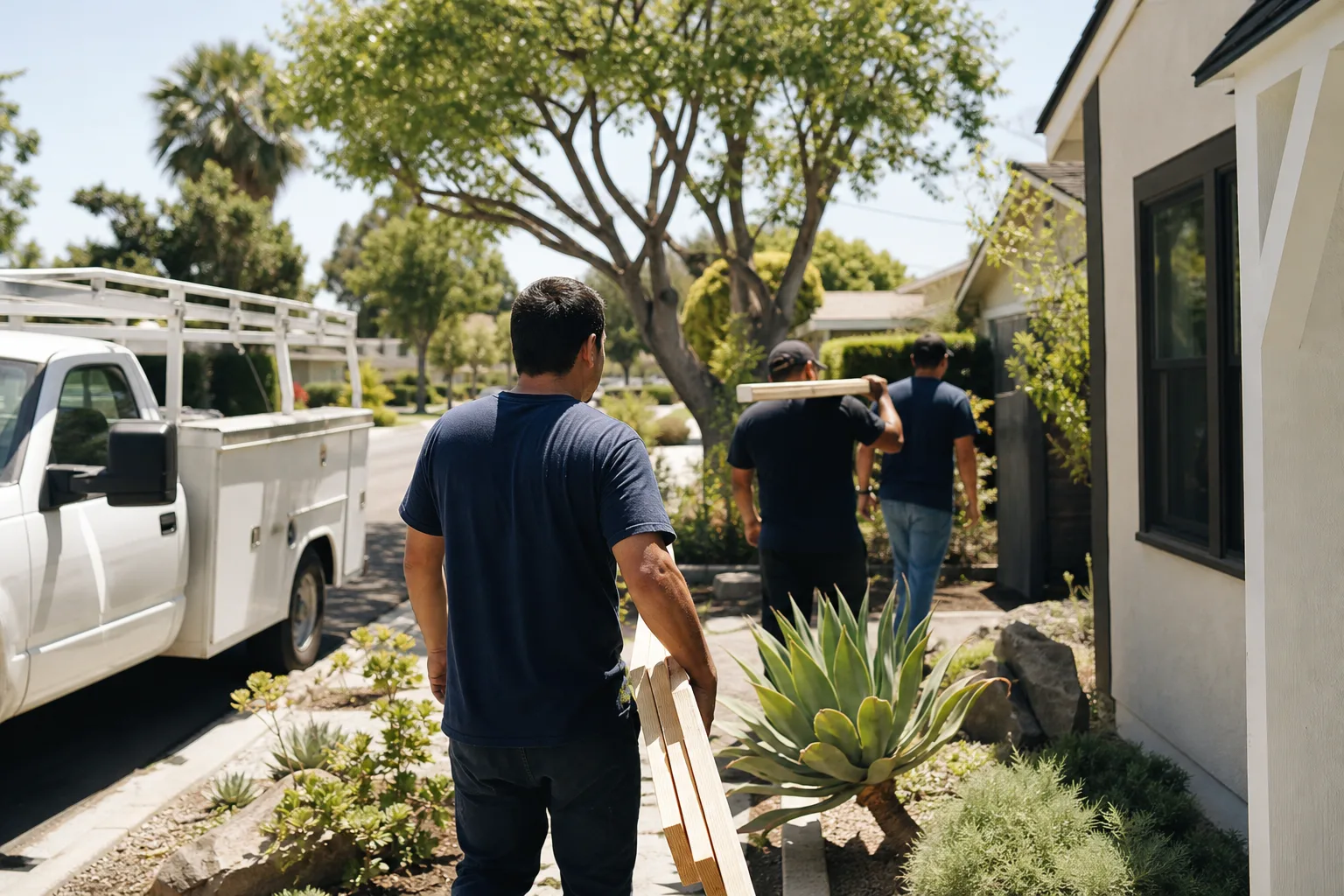
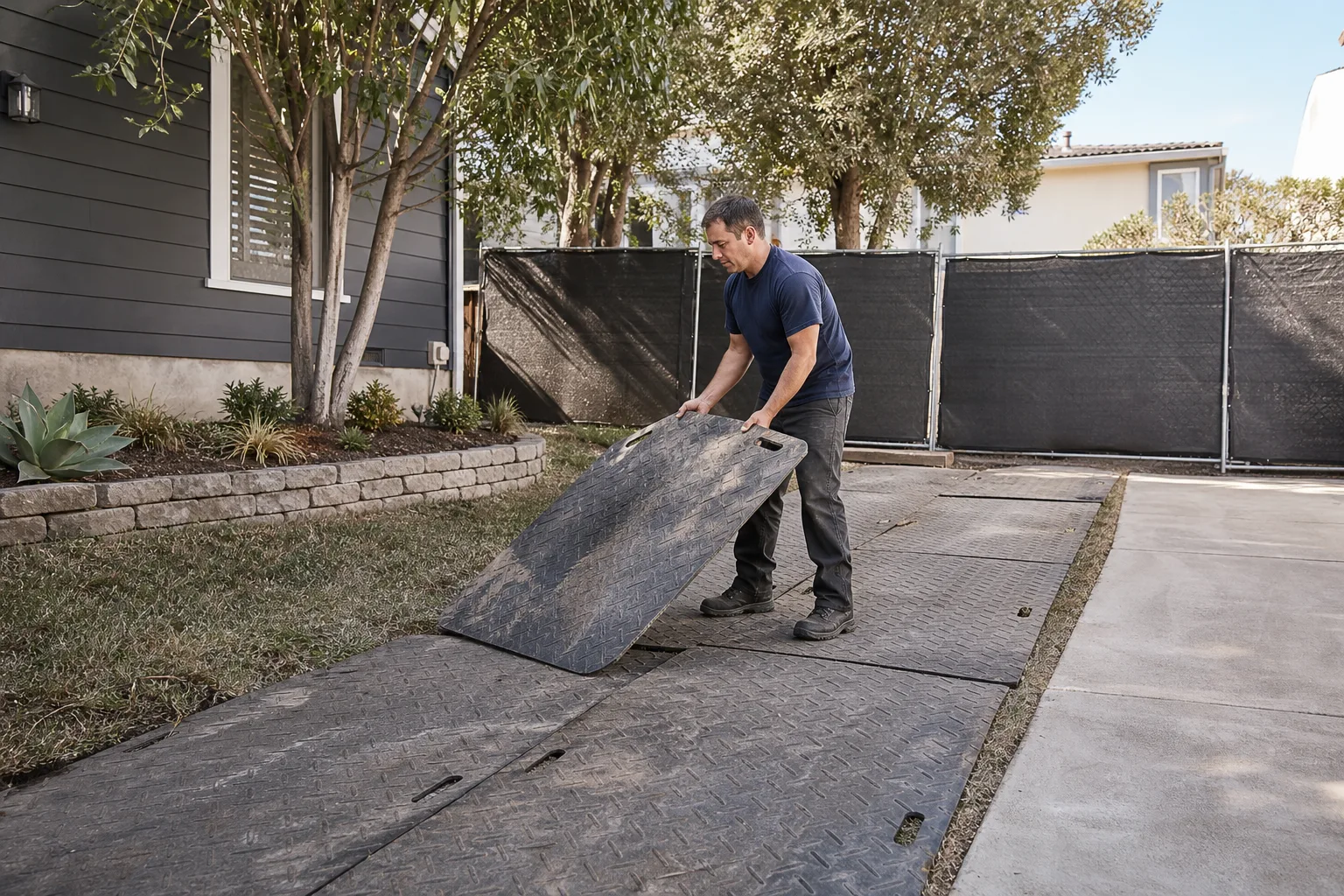
- Side and rear access for construction. Austin backyards are often fenced in on three sides with no gate wide enough for a skid steer, lumber delivery, or a crane. That fact changes build cost and schedule. We measure the access route as part of the walk.
Site Assessment for Prefab and Modular ADUs
Homeowners researching ADUs in Austin are usually comparing two paths: conventional stick-built construction and one of the factory-built platforms like Abodu, Cover, or a Tuff Shed-style shell. The site assessment is where that choice gets tested against the actual land. A prefab unit saves on construction time, but it does not change where a building may sit on your lot. Setbacks, impervious cover, tree rules, and utility distances still apply in full. What changes is the delivery path, the foundation type, and the tolerance for crane or forklift access. Our assessments flag these constraints in writing, so you know before you wire a deposit whether the platform you want will even make it into your backyard. We are fluent with the major prefab platforms and with conventional builds using materials like James Hardie siding, so the recommendation you get is matched to your lot, not to whatever system we happen to prefer.
How Much Does a Site Assessment Cost in Austin?
Plan on $950 to $2,800 for a full written ADU site assessment in Austin, with most single-family lots landing between $1,200 and $1,800. The biggest cost drivers are floodplain research, arborist reporting, and survey work.
What does a site assessment include?
A site assessment includes zoning and overlay research, an on-site measurement of buildable area, setback and impervious cover calculations, utility connection checks, drainage review, and tree identification. You receive a written report with findings, code references, and a build verdict.
Do I need a site assessment for a garage conversion in Austin?
Most garage conversions do not need a full ground-up site assessment in Austin because the structure already exists, but you still need a lighter review of setbacks, impervious cover, and utility connections. We include that review in every garage conversion estimate and only escalate to a full assessment if the lot conditions demand it.
Can you do a site assessment before I buy a property?
Yes, and that is one of the smartest times to get one. We can walk a property you are under contract to buy and report on ADU feasibility before your option period ends, so you can back out or renegotiate if the lot will not support your plans.
How soon can you get to my property in Austin?
We schedule site assessments Monday through Saturday, and in most cases we can walk your property within 3 to 5 business days of your call. A live person answers the phone 24 hours a day, 7 days a week at (361) 309-9568, so you can book the visit whenever you have a moment.
FAQs – Site Assessment in Austin
Do I need a site assessment before designing an ADU in Austin?
Yes, for most Austin lots a site assessment should happen before design, because setback limits, tree rules, impervious cover caps, and floodplain overlays can all shrink or move the buildable area. Designing first and assessing second is how homeowners end up paying for plans that cannot be permitted. We recommend the assessment as step one, which is why it sits at the front of our ADU Design & Permitting process.
What does a site assessment look for that I might not think about?
You will think about trees and property lines. You may not think about your lot’s impervious cover cap, the utility trench running under the planned footprint, the width of the gate a concrete pump needs to fit through, or the drainage easement Austin’s code attaches to your new roof. We check all of it because those are the items that create surprise costs and permit denials.
Can you fix site problems you find during the assessment?
In many cases, yes. A site assessment identifies the problem, and then we can either adjust the ADU footprint to avoid it, or design and build the fix as part of the project. Some fixes require additional city approval, like a variance, and we walk you through that process with honest odds instead of promises.
Is the site assessment covered by the 365-Day Done Right Promise?
The assessment itself is a written report, and if a finding in that report is wrong and it changes your project, we make it right. The promise covers the work we do with a written guarantee for a full year: if something fails, we come back and correct it at no charge. That applies to everything from the assessment to the final walkthrough.
Why Homeowners Choose Fielding ADU Austin for Site Assessment
Most Austin homeowners come to us after someone else already burned them: a contractor who said the permit would be no problem and then left the permit board blank, or a builder who gave a verbal estimate and changed it at the door. Our job on day one is to be the opposite of that. Every site assessment gets a written price before we begin. Every crew member is background-checked and arrives in uniform. A live person answers the phone when you call, whether it is noon or midnight. And the entire engagement runs under The Garrison Standard, the 2006 founding rule of the Garrison Partners organization we belong to: show up in the window, price in writing, by the book, leave it clean, and stand behind it for a year. If the assessment misses something that matters and it costs us inside that year, we correct it at no charge.
Call (361) 309-9568 to schedule a site assessment on your Austin property. The estimate for the assessment is free, the report is yours to keep, and the price we give you is the price you pay.
Written by Reed Calloway, Owner at Fielding ADU Austin, serving Austin.