James Hardie New Detached ADU: The Austin Owner’s Guide
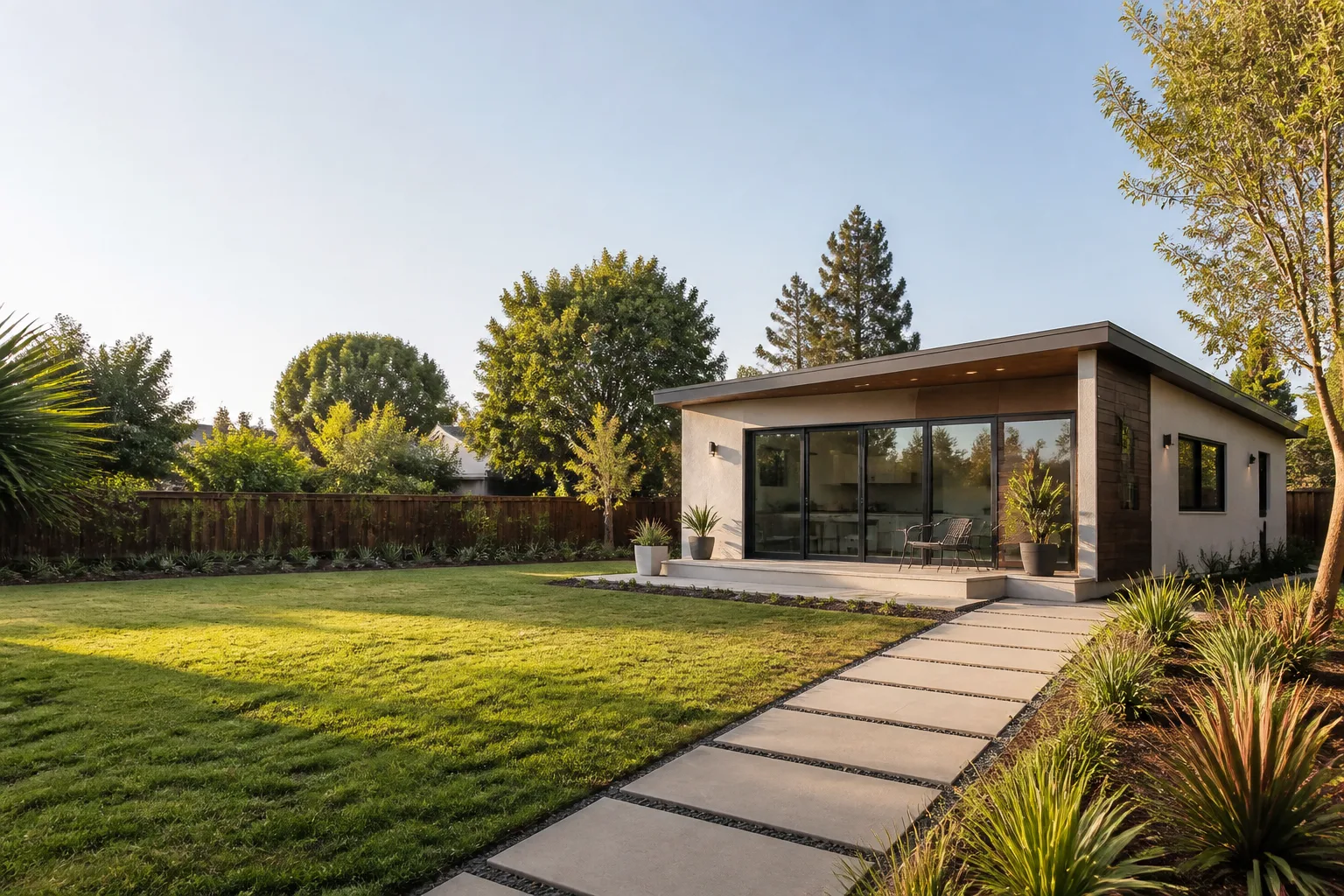
A new detached ADU built with James Hardie siding in Austin typically runs $180,000 to $320,000 all-in, depending on square footage, foundation work, and utility runs. We stock James Hardie plank, panel, and trim products for ADU builds and can source what we don’t carry within three to five business days. Most Austin homeowners reach out to us because they’ve gotten a bid from another contractor that left out site prep, sewer taps, or the second electrical meter, and they want a number that actually holds.
Which James Hardie Models This Applies To
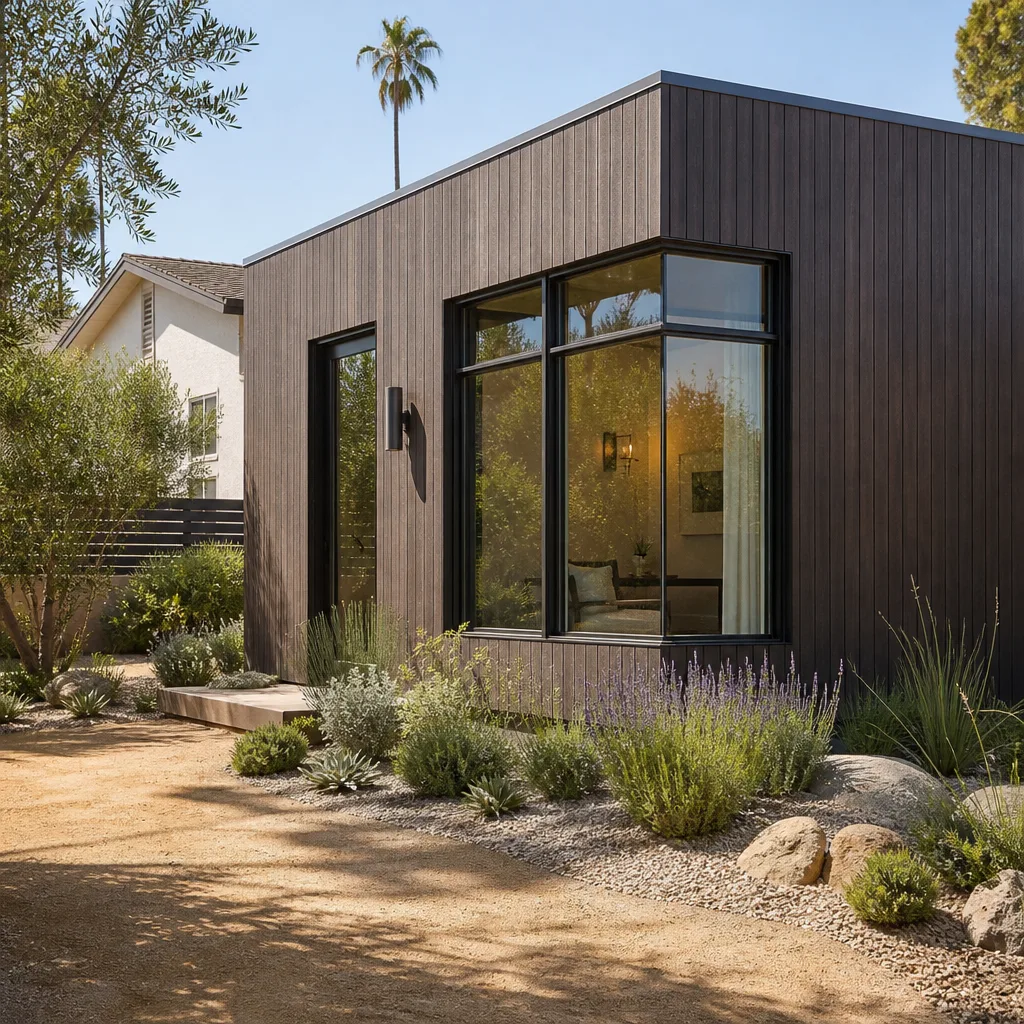
For detached ADUs in Austin, we work with three James Hardie product lines: HardiePlank lap siding (5/16″ thick, available in 4″, 5″, and 7″ exposures), HardiePanel vertical siding (4′ x 8′, 4′ x 9′, and 4′ x 10′ sheets), and HardieTrim boards (5/4″ and 4/4″ thickness, smooth or Cedarmill texture). The product you need depends on the ADU’s design and the city’s fire-code requirements. Austin currently requires ignition-resistant exterior materials within certain distances of property lines, and James Hardie’s fiber cement products meet that standard without extra coatings or treatments.
One compatibility gotcha we see regularly: HardiePlank lap siding requires a 1/8″ gap at butt joints and specific flashing details at penetrations. If a previous contractor caulked those joints shut, you’ll see buckling along the wall within two or three Austin summers. We also flag this: James Hardie has changed its ColorPlus finish formulation twice since 2018. If you’re matching a wall built before 2020, order a physical color chip before we begin, because the batch tone shifts slightly and you don’t want a visible patch line.
Fielding ADU Austin is an independent ADU and siding contractor. We are not affiliated with James Hardie, and we don’t pretend to be. We buy direct from their Texas distributors and install to their published specs.
Signs Your James Hardie New Detached ADU Is Failing
- Bowed or buckled lap siding at butt joints. This usually means the original installer nailed too close to the edge or caulked the joints. Fiber cement doesn’t expand much, but when water gets behind it, the substrate swells and pushes the plank outward. You’ll see it first on west-facing walls, where afternoon sun hits wet siding hardest.
- Paint peeling in vertical streaks below window corners. That’s a flashing failure, not a siding failure. Water is getting behind the plank and running down the wall cavity. The siding itself may still be fine, but the wall assembly needs to be opened and re-flashed.
- Soft spots or bubbling under the bottom course. In Austin’s heavy clay soils, we see slab heave push the bottom course down against grade. If the siding sits less than 6″ above finished grade, it wicks moisture. Fix the clearance, replace the course, and address the drainage before you spend money on new siding.
- Cracks radiating from nail heads. This is almost always overdriven fasteners. James Hardie requires nails to sit flush, not countersunk. If the installer buried nail heads, you’ll see cracks within five years. We replace the affected planks and correct the fastening pattern on the replacement course.
- Mold or mildew stains on the north side. Austin’s humidity plus shade means the north face rarely dries out. James Hardie products don’t rot, but the debris and pollen that collects on them does. If you’re seeing green growth, it’s a drainage and maintenance issue, not a product defect. We can replace the affected course and recommend a regrade if needed.
Replacement Cost & What’s Included
For an Austin detached ADU, James Hardie siding replacement on a single wall runs $3,800 to $7,200 installed, including tear-off, house wrap repair, flashing replacement, and new James Hardie product. A full exterior re-side on a 400-square-foot ADU runs $18,000 to $34,000, depending on access, existing damage, and trim scope. The labor is the biggest variable: a detached structure in a tight backyard means scaffolding or hand-carrying every bundle through a gate, where a garage-front unit lets us pull the truck right up.
Every quote from Fielding ADU Austin is written, line-itemed, and fixed before we order material. No change orders downstream, no “we found rot” upcharges unless there’s genuinely something hidden behind the wall, and even then we show you the issue before we touch it. The Garrison Standard covers workmanship for 365 days. If something fails, we come back and correct it at no charge. Reed Calloway writes the scopes himself, because he’s seen what happens when a bid leaves out the flashing line and the homeowner eats the difference.
DIY or Call Us?
Siding is not a high-tension hazard like a garage door spring, but it’s also not a weekend paint project. You can safely inspect your ADU’s siding: walk the perimeter, look for the symptoms above, check the clearance between the bottom course and grade, and photograph anything that looks off. What you should not do is pull off a plank to inspect behind it. Once you remove a course of fiber cement, you’ve broken the flashing plane, and if it rains before the wall is re-sealed, you’ve doubled the repair scope.
If you find buckling, cracking, or staining, call us at (361) 309-9568. We’ll walk the structure, measure the damage, and put a written number in front of you. You decide from there.
FAQs
James Hardie fiber cement siding carries a 30-year non-prorated warranty on the product, and in Austin’s climate we typically see 25 to 35 years of service life before full replacement. The failure points are almost always installation-related: flashing errors, fastening mistakes, or grade clearance issues that cut the wall’s life in half. Call (361) 309-9568 and we’ll tell you honestly whether you’re looking at a repair or a re-side.
Yes, individual planks and panels can be cut out and replaced without re-siding the whole ADU, as long as the damage is isolated and the water hasn’t spread behind adjacent courses. We cut the damaged plank, inspect the weather barrier behind it, replace any compromised flashing, and install the new plank to James Hardie’s published fastening schedule. If the damage runs more than three courses, full-wall replacement usually costs less per square foot.
A single-wall replacement takes one to two days once material is on site. A full exterior re-side on a 400-square-foot ADU typically runs four to seven working days, including tear-off, water-resistive barrier, flashing, siding, trim, and paint. Weather in Austin can stretch that, but we schedule around the forecast and don’t leave a wall open overnight if rain is coming.
We stock standard HardiePlank 5/16″ lap siding in the most common Austin colors, plus 4′ x 8′ HardiePanel sheets and standard trim profiles. Specialty colors and larger panel sizes are ordered from James Hardie’s Texas distribution centers and arrive in three to five business days. That’s a real number, not an estimate. We’ll tell you the lead time before you sign anything.
Call Fielding ADU Austin
If your James Hardie siding is failing or you’re planning a new detached ADU, put it in writing and then do what it says. That’s how we work. Call (361) 309-9568 for a free written estimate, or to have Reed or a crew lead walk your property and tell you what you’re actually looking at. We’re in Austin, we answer the phone, and we’ll give you a number you can plan around.
Written by Reed Calloway, Owner, Fielding ADU Austin at Fielding ADU Austin, serving Austin and nearby areas.