Last updated October 15, 2026
ADU Permits, Codes & Inspections in TX: What You Need to Know
Texas has no statewide ADU ordinance. Not one. The state hands that authority to municipalities, and Austin has rewritten its ADU rules three times since 2019. That means the guide you read last year, the neighbor’s story from two years ago, and the contractor’s advice from six months ago may all describe a version of the code that no longer exists. This guide maps exactly which rules come from which authority, what Austin’s Development Services Department currently enforces, and where the permit process actually breaks down for homeowners. If you’re planning an ADU in Austin, you need to know the difference between state baseline and local amendment before you spend a dollar on design.
Quick Answer
To build an ADU in Austin, you need a building permit from the city’s Development Services Department, and your project must meet both the Texas-adopted International Residential Code and Austin’s local amendments on setbacks, height, lot coverage, and parking. Plan on a pre-application meeting, a full drawing set sealed by a Texas-licensed professional, and roughly five inspection stages from foundation to final. Permit fees for a typical 600-square-foot ADU in Austin run $4,000 to $8,000 depending on scope, before impact fees.
Table of Contents
- Texas State Code vs. Austin Local Amendments: What’s Different
- Step 1: Verify Your Lot Before You Spend Money
- Austin DSD’s Pre-Application Process: When It’s Required and What to Bring
- What ADU Permits Actually Cost in Austin
- The 5-Stage Inspection Sequence and What Fails Each Stage
- Permitted vs. Unpermitted ADUs: What’s Really at Risk
- How Prefab and Modular ADUs Handle Austin Permitting
- Common Mistakes to Avoid
- When to Call a Professional
- Frequently Asked Questions
Texas State Code vs. Austin Local Amendments: What’s Different
The state of Texas adopts the International Residential Code, known as the IRC, as its baseline for one- and two-family dwellings. That code covers the structural minimums: framing spans, foundation depth, electrical load capacity, plumbing vent sizing, and egress window dimensions. What it does not cover is where you can put the building on your lot, how tall it can be, how close to the property line, or whether you need to provide parking for it. Those rules are local zoning, and in Austin they live in a different code entirely.
Austin’s local amendments layer onto the IRC in three areas that repeatedly cause permit delays and failed inspections:
- Electrical: Austin requires arc-fault circuit interrupters on more circuits than the base IRC, and the city enforces a stricter interpretation of branch circuit labeling. If your electrician has not worked an Austin ADU in the last two years, expect a correction notice on the rough-in inspection.
- Plumbing: Austin amendments mandate a minimum water heater location clearance that exceeds the IRC in tight mechanical closets, and the city requires a thermal expansion tank on any ADU served by a closed water system. Those are two of the most common rough-in failures we see on ADU builds in Austin.
- Egress: The IRC requires one emergency escape opening in each sleeping room with a minimum clear opening of 5.7 square feet. Austin enforces that number literally. A window that clears 5.4 square feet fails. No negotiation, no grandfathering, no field adjustment. This is a frequent final-inspection fail on garage conversions and small-bedroom ADUs.
If you’re working from an online plan set or a prefab vendor’s standard drawings, confirm in writing that the plans have been updated for Austin’s current local amendments, not a generic Texas code package. The difference between the two is a stack of redlines and a month of resubmittal time.
Step 1: Verify Your Lot Before You Spend Money
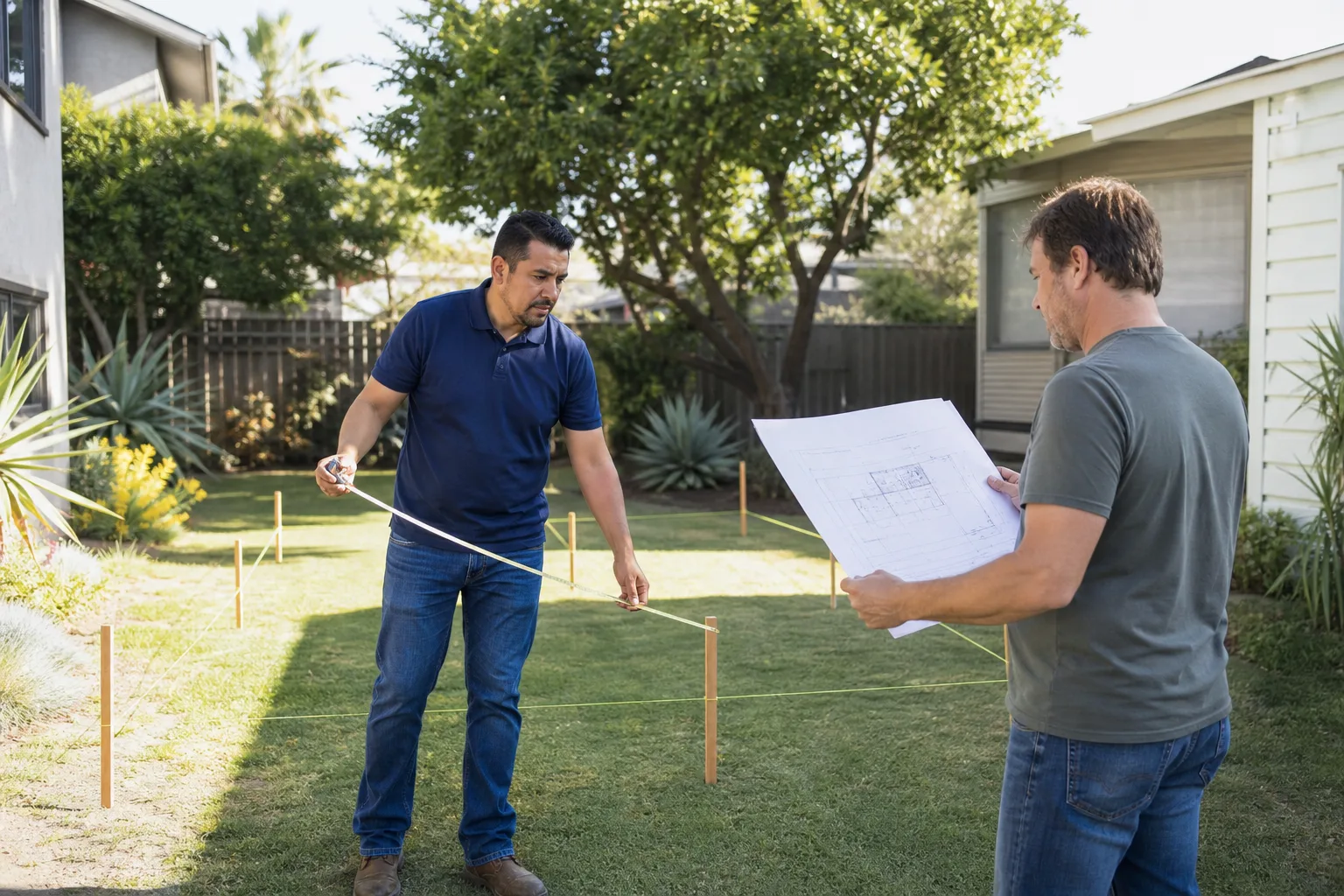
Before you sketch anything, before you call an architect, before you put down a deposit with any builder, you need to know what your specific lot allows. Austin’s zoning code is not uniform across the city. A lot in Crestview carries different ADU rules than a lot in East Riverside, and a lot in the Mueller development has overlay restrictions that a lot three blocks away does not.
Austin’s public GIS portal at the Development Services Department website lets you pull your lot’s zoning designation, flood zone, and any overlay districts in under ten minutes. Here is the sequence:
- Open Austin’s GIS property profile tool and search your address.
- Note the zoning designation. In Austin, ADU rules vary significantly by zone. SF-3 zoning inside the urban core carries different minimum lot size and setback rules than SF-2 zoning in the suburban ring.
- Check the flood zone. If any part of your ADU footprint sits in a FEMA floodplain, your permit application changes materially. You will need a floodplain development permit, and your finished floor elevation may be mandated above base flood elevation. That can alter your foundation design and your budget.
- Check for overlay districts. Austin has dozens of them: neighborhood conservation overlays, historic districts, watershed protection zones, transit-oriented development overlays. Each one can change setback requirements, height limits, or impervious cover rules.
- Check impervious cover limits. Austin caps total impervious cover as a percentage of lot area, and the cap varies by watershed. Your existing house, driveway, and patio already count against that cap. If you are near the limit, your ADU may need to shrink or the site plan may need to include permeable paving.
We’ve had clients come to us with finished plans for a 900-square-foot ADU on a lot that caps them at 700 square feet because of impervious cover. By the time they called us, they had spent $8,000 on design fees for a structure that could not be permitted. The ten-minute GIS check would have caught it. Do not skip this step.
Austin DSD’s Pre-Application Process: When It’s Required and What to Bring
Austin’s Development Services Department offers a pre-application meeting for ADU projects, and for any ADU over 800 square feet or any lot with an overlay or variance request, the meeting is effectively mandatory if you want your permit application to be accepted on first submittal. The meeting is a working session with a city plan reviewer, not a sales pitch. You bring your site plan, your questions, and your lot research, and the reviewer tells you what will and will not pass before you pay for full construction drawings.
Here is what to bring:
- Site plan, even a rough one: property lines, existing structures, proposed ADU footprint with dimensions and setbacks to all property lines. The city reviewer will mark this up in the meeting.
- Your zoning printout from the GIS portal: showing the zoning designation, overlays, and flood zone. Do not expect the reviewer to look it up for you mid-meeting. Bring it printed.
- Your proposed build method: conventional site-built, panelized, or modular. The reviewer needs to know because different review paths apply. A unit from Plant Prefab or Abodu goes through a different plan review track than a stick-built structure, and you want to hear the reviewer walk through that difference in person.
- Your list of specific code questions: written out in advance. Vague questions get vague answers. “Can I put a second-story ADU over my detached garage in an SF-3 zone with a 25-foot rear setback?” gets a specific answer. “What can I build?” does not.
- Your contractor, if you have one selected: not required, but useful. The contractor can catch structural and sequencing issues in the meeting that the reviewer may not volunteer.
- Building permit fee: $2,000 to $4,500, calculated on valuation. Most 600-square-foot ADUs in Austin are valued between $180,000 and $260,000 for permit purposes, and the fee scales from there.
- Electrical permit: $250 to $600 depending on service size and circuit count.
- Plumbing permit: $250 to $700 depending on fixture count and whether you’re tying into an existing sewer lateral or adding a new one.
- Mechanical permit: $150 to $400 for HVAC work.
- Impact fees: Austin charges water and wastewater impact fees on new ADUs. A new meter or a second connection can run $3,000 to $8,000. This is the line item that surprises people most, and it is specific to Austin’s utility district.
- Plan review fee: $500 to $1,200, charged at submittal and non-refundable.
- Tree review and site plan fees: variable depending on lot conditions. If your ADU triggers tree protection review, budget another $300 to $1,000.
- Sale disclosure liability: Texas property disclosure law requires you to disclose unpermitted work to a buyer. You can not sell an Austin home with an unpermitted ADU without either disclosing it or lying. Disclosing it drops the sale price and shrinks the buyer pool. Lying about it exposes you to a post-sale lawsuit. Neither is hypothetical; we have seen both outcomes play out in Austin’s 2023-2025 resale market.
- Insurance claim denial: if an unpermitted ADU has a fire or a plumbing failure and the damage traces to work that was never inspected, the insurance carrier has a clear path to deny the claim. A permitted ADU has an inspection record that closes that loophole.
- Lender complications: some mortgage lenders will not underwrite a home with a substantial unpermitted structure, because the structure is an uninsured liability on the property.
- City enforcement: Austin’s code enforcement is complaint-driven, but it does respond. A neighbor who cares about setbacks or a buyer’s inspector who flags the ADU can trigger a violation notice, and the remedy is usually either demolition or a retroactive permit process that costs more than the original permit would have.
- The lot is flat and free of protected trees, so the site work and foundation are straightforward.
- The unit is a standard model the vendor has already sold in Texas, with Austin-specific amendments already worked into their standard drawing set.
- The homeowner wants speed and price certainty, and accepts a narrower set of design options.
- Skipping the GIS lot check before design. We covered this above, but it bears repeating. Spending $8,000 on plans for a structure that violates impervious cover or setback rules is a preventable loss, and it happens more often in Austin than in any other Texas market we track.
- Pricing the permit from a generic online estimate. Austin impact fees, tree review fees, and local plan review fees add thousands to the generic Texas number. Get the Austin-specific number in writing from the DSD before you budget.
- Hiring a contractor who has never pulled an Austin ADU permit. Austin’s local amendments are specific enough that a builder who works mostly in Round Rock or Dripping Springs will fail inspections here. Ask for an Austin ADU permit history, not just a license number.
- Assuming your prefab vendor handles all permitting. Most prefab vendors handle factory documentation, not Austin site permits. You still need a local contractor or expediter for the foundation, utility, and zoning approvals. Confirm in writing who owns which permit.
- Waiting to check the impact fee total. A new water tap can add $5,000 to $8,000 to your project. Austin Water can confirm your specific fee in advance. If the number changes your budget, you want to know before construction starts, not after.
- Failing a re-inspection for the same item twice. Austin inspectors track repeat failures. A builder who fails the same MEP item twice signals a crew that does not understand Austin amendments. That is a red flag to address immediately, not a normal part of the process.
- Building an unpermitted ADU and planning to sell later. The disclosure requirement in Texas makes this a slow-motion financial problem. The fix is either a risky sale or a retroactive permit that costs more than the upfront process.
Schedule the meeting through the DSD’s online appointment portal. In Austin, wait times for pre-application meetings have run two to four weeks depending on volume, so build that buffer into your timeline. The meeting itself is free or low-cost, but the information it surfaces can save thousands in redesign work.
What ADU Permits Actually Cost in Austin
Permit cost is the question most homeowners ask first, and it is the number most often misstated by contractors and online guides. Here is the honest breakdown for a typical 600-square-foot detached ADU in Austin, as of current DSD fee schedules:
Total permit and fee burden for a typical Austin ADU: $7,000 to $16,000 before you pour a yard of concrete. That range is wide because impact fees swing hard based on whether you need a new water tap or can tie into an existing line. Get the impact fee number confirmed in writing with Austin Water before you sign a construction contract, because no general contractor can waive or negotiate it.
As a comparison point, a garage conversion that stays within the existing structure typically avoids new water or wastewater impact fees, which is why garage conversions in Austin often carry permit costs under $5,000 total. A detached new-build ADU is where the fees stack up.
The 5-Stage Inspection Sequence and What Fails Each Stage
Austin’s inspection sequence for an ADU is structural, and it is unforgiving. Each stage must pass before the next stage is released, and the city inspector has full authority to red-tag work that violates a local amendment. Here is the sequence, in order, with the most common failure at each stage:
Stage 1: Foundation
Inspected after forms and reinforcement are set and before concrete is poured. The most common failure here is undersized reinforcement steel or incorrect footing depth. On Austin’s expansive clay soils, the foundation spec matters more than in most Texas cities. A footing poured to a Gulf Coast standard will pass in Houston and fail in Austin. Get your foundation plan sealed by a Texas-licensed engineer who knows Central Texas soil conditions.
Stage 2: Framing
Inspected after walls and roof are framed and sheathed, before any interior finishes. The most common failure here is missing shear wall nailing on the windward side. Austin adopted wind load requirements that exceed the base IRC, and a framing crew working from out-of-date spec books will under-nail the plywood. The fix is additional nailing, and it is cheap if caught at this stage and expensive if the inspector has to come back twice.
Stage 3: MEP Rough-In
Inspected after the mechanical, electrical, and plumbing lines are run but before any drywall goes up. This is the stage that fails most often on Austin ADUs, for three reasons: missing arc-fault protection on circuits the base IRC does not require it on, missing thermal expansion tanks on water heaters, and unlabeled or mislabeled circuit panels. All three are Austin-specific amendments. A crew that works mostly outside Austin city limits will hit all three.
Stage 4: Insulation
Inspected after insulation is installed but before drywall covers it. The most common failure here is missing or incorrectly placed vapor barrier on the underside of the floor system in pier-and-beam ADUs. Austin’s humidity makes this a real durability issue, and the city inspector checks it specifically. Spray foam thickness is the other frequent red flag; the installed depth must meet the stated R-value on the building plans, and variance of more than a half-inch triggers a fail.
Stage 5: Final
Inspected at project completion, before the utility release and certificate of occupancy. The most common failure here is egress window clear opening that does not meet the literal 5.7-square-foot requirement, followed by missing GFCI protection on exterior outlets, and then missing carbon monoxide detectors where an attached garage shares a wall with the ADU. All three are checklist items a thorough builder clears the day before the final inspection.
Each failed inspection costs a re-inspection fee, typically $75 to $150 in Austin, plus the schedule delay. A build with three failed inspections adds a week and several hundred dollars to the project. A build with zero failed inspections is the mark of a builder who has done this in Austin before.
Permitted vs. Unpermitted ADUs: What’s Really at Risk
Homeowners ask us whether a permit really matters, usually because they have heard a story about someone adding a casita without one and getting away with it. The honest answer: the permit matters most when you sell, when you insure, and when something fails.
What a permitted ADU actually protects you from, in the Austin market:
The permit is not a decoration. It is the record that your ADU was built to code and passed inspection. In our experience as room addition contractors in Austin, the homeowners who skip permits to save a few thousand dollars are the ones who pay ten times that amount later. The math does not work.
How Prefab and Modular ADUs Handle Austin Permitting
Prefab and modular ADUs have a different permitting path in Austin, and it is one reason they have gained ground among Austin homeowners. A unit from Plant Prefab, Abodu, or Dvele arrives with factory documentation that includes structural calculations, material specs, and in some cases a third-party inspection report from the factory. That documentation replaces a chunk of the local plan review work for the shell.
But the local side still matters. The foundation, the utility connections, the site work, and the compliance with Austin’s zoning and setback rules are all permitted through the DSD, and they are inspected on site just like a conventional build. A prefab unit does not skip the five-stage inspection sequence; it just clears some of the plan review faster because the factory documentation is already stamped.
In our experience, the prefab path works best in Austin when:
The conventional path works best when the lot is irregular, the design is custom, or the homeowner wants specific exterior materials like James Hardie siding in a particular color and profile. We build both ways, and we tell clients the truth about which one makes sense for their lot and budget. A Tuff Shed-style structure converted to a living space has its own quirks in Austin; the floor system and insulation are rarely up to residential code without significant retrofit work, so the conversion cost often approaches a purpose-built small ADU by the time permits clear.
For the full picture on how these options compare on your specific lot, start with our Fielding ADU Austin home page or call us directly.
Common Mistakes to Avoid
When to Call a Professional
Call a professional before you spend money on design, not after. If your lot has an overlay district, a floodplain boundary, or a variance request, the permit path gets complicated fast, and a builder who has navigated Austin DSD before will save you months. If you’re considering a prefab unit, a builder who works with Plant Prefab, Abodu, and similar platforms can help you compare the real cost and permit load of each option against a conventional build. If you’re converting a garage or adding a room, the same logic applies. Fielding ADU Austin offers free estimates in Austin. Call (361) 309-9568 and ask for Reed. We’ll walk your lot, check your zoning, and give you a written price before any work starts.
Frequently Asked Questions
For a typical 600-square-foot detached ADU in Austin, expect to pay $7,000 to $16,000 in total permit and impact fees, with the biggest variable being whether you need a new water tap or can tie into an existing line. Garage conversions that stay within the existing structure run lower, usually under $5,000. For an exact number on your project, call (361) 309-9568 and we’ll pull your lot’s specific fee schedule.
You need a pre-application meeting for any ADU over 800 square feet or any project requiring a variance or overlay review, and the meeting is worth scheduling regardless of project size because it surfaces code issues before you pay for full drawings. Schedule through the DSD’s online portal and bring your GIS zoning printout, a rough site plan, and a written list of specific questions.
Texas adopts the International Residential Code as a baseline, covering structural, electrical, and plumbing minimums. Austin layers local amendments on top that tighten electrical arc-fault requirements, add thermal expansion tank mandates, enforce literal egress window dimensions, and set zoning rules for setbacks, height, lot coverage, and parking that do not exist at the state level. The local amendments are where most Austin permit delays originate.
For a straightforward ADU on an uncomplicated lot, expect three to six months from pre-application to permit approval, depending on DSD volume and any resubmittal rounds. Projects with variance requests, floodplain review, or overlay complications can add two to four months. The inspection sequence then runs alongside construction and typically adds two to four weeks across the five stages.
You can, but the exposure is real. Texas disclosure law requires you to reveal unpermitted work at sale, your insurer can deny claims tied to uninspected work, and Austin code enforcement can require demolition or a retroactive permit that costs more than the original process. On a $200,000 ADU, the permit cost is a small fraction of the risk you carry without one.
Yes. The factory documentation from vendors like Plant Prefab and Abodu streamlines the plan review process, but the foundation, site work, utility connections, and local zoning compliance all require Austin DSD permits and on-site inspections. The five-stage inspection sequence applies to prefab and conventional builds equally. Call (361) 309-9568 to discuss which build method fits your lot.
The Bottom Line
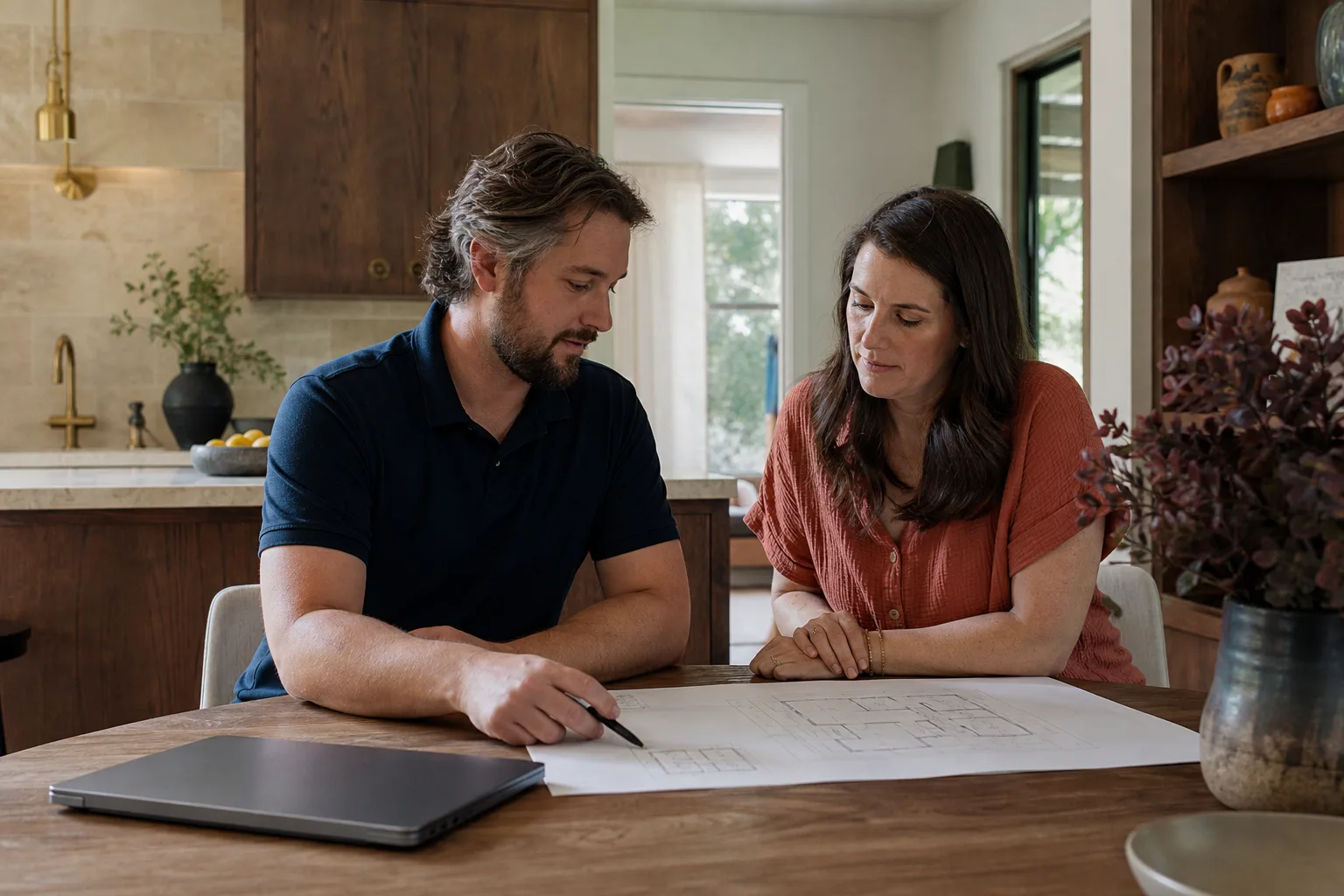
Austin ADU permitting is a two-layer system: the Texas IRC baseline plus Austin’s specific local amendments on electrical, plumbing, egress, zoning, and impact fees. The process runs from a GIS lot check, through a pre-application meeting, into plan review, and then through five inspection stages, each with predictable failure points that a builder experienced in Austin’s market knows how to avoid. Permits cost real money, but they protect you from disclosure liability, insurance denial, and enforcement risk that dwarf the permit fee. If you’re planning an ADU in Austin, get your lot checked, get your fees confirmed in writing, and work with a builder who has pulled Austin ADU permits before.
Written by Reed Calloway, Owner at Fielding ADU Austin, serving Austin since 2006.