Last updated October 15, 2026
DIY vs Professional ADU: The Austin Homeowner’s Decision Guide
Most Austin homeowners believe the DIY-versus-hire decision on an accessory dwelling unit comes down to how handy they are. It doesn’t. The real line sits inside Austin’s Development Services Department (DSD) permit requirements, which allow a homeowner to act as their own general contractor but still require licensed MEP subcontractors, calibrated inspections, and a level of paperwork that surprises even experienced renovators. This guide maps exactly where that line falls in Austin, what each path actually costs in time and money, and how to decide without losing a quarter of your budget to a stop-work order.
Quick Answer
Hiring a professional ADU builder in Austin costs more upfront, but owner-managed builds fail Austin inspections at roughly double the rate of contractor-managed projects, and a single failed inspection by an unlicensed trade can trigger a stop-work order that erases thousands in apparent savings. For guidance on finding the right professional, see our How to Hire a ADU Contractor in Austin: A Step-by-Step Guide. DIY makes sense only for finish work outside the permitted scope: painting, flooring, fixtures, landscaping. For anything behind the permit card, a licensed contractor is the financially rational choice.
Table of Contents
- What Texas Law and Austin DSD Actually Allow a Homeowner to Do
- The Real Cost of Being Your Own General Contractor in Austin
- Where DIY Legitimately Reduces ADU Cost
- Why Owner-Managed ADUs Fail Austin Inspections
- Prefab, Modular, and Conventional Builds: What Changes the Decision
- How to Test Your Project Management Capacity Honestly
- Common Mistakes to Avoid
- When to Call a Professional
- Frequently Asked Questions
- The Bottom Line
What Texas Law and Austin DSD Actually Allow a Homeowner to Do
Texas law grants a homeowner the right to pull a building permit on their own property and act as their own general contractor. That’s the broad headline. Austin’s Development Services Department narrows it considerably once you read the ADU-specific requirements, and most homeowners never read past page one of the application.
Here’s what the Austin DSD allows a homeowner-builder to do, by permit type:
- Building permit: A homeowner may act as the general contractor, pull the permit, and legally perform framing, sheathing, roofing, siding, and general carpentry work. No license is required for the homeowner on their own homestead.
- Electrical permit: Austin requires a licensed master electrician to pull the electrical permit. A homeowner cannot legally wire a new ADU themselves, even with a homeowner electrical permit. The city eliminated that path for new accessory dwellings.
- Plumbing permit: A licensed master plumber must pull the permit and perform or supervise the plumbing work. No homeowner exception exists for new ADU construction.
- HVAC permit: A licensed HVAC contractor must handle the permitting and installation. Ductwork, refrigerant lines, and gas connections all fall under this requirement.
Translation: you can swing the hammer all you want, but you cannot legally touch the electrical panel, the water supply line, the drain lines, or the HVAC system in a new ADU. The trades that fail inspections most often are the trades Austin won’t let you do yourself.
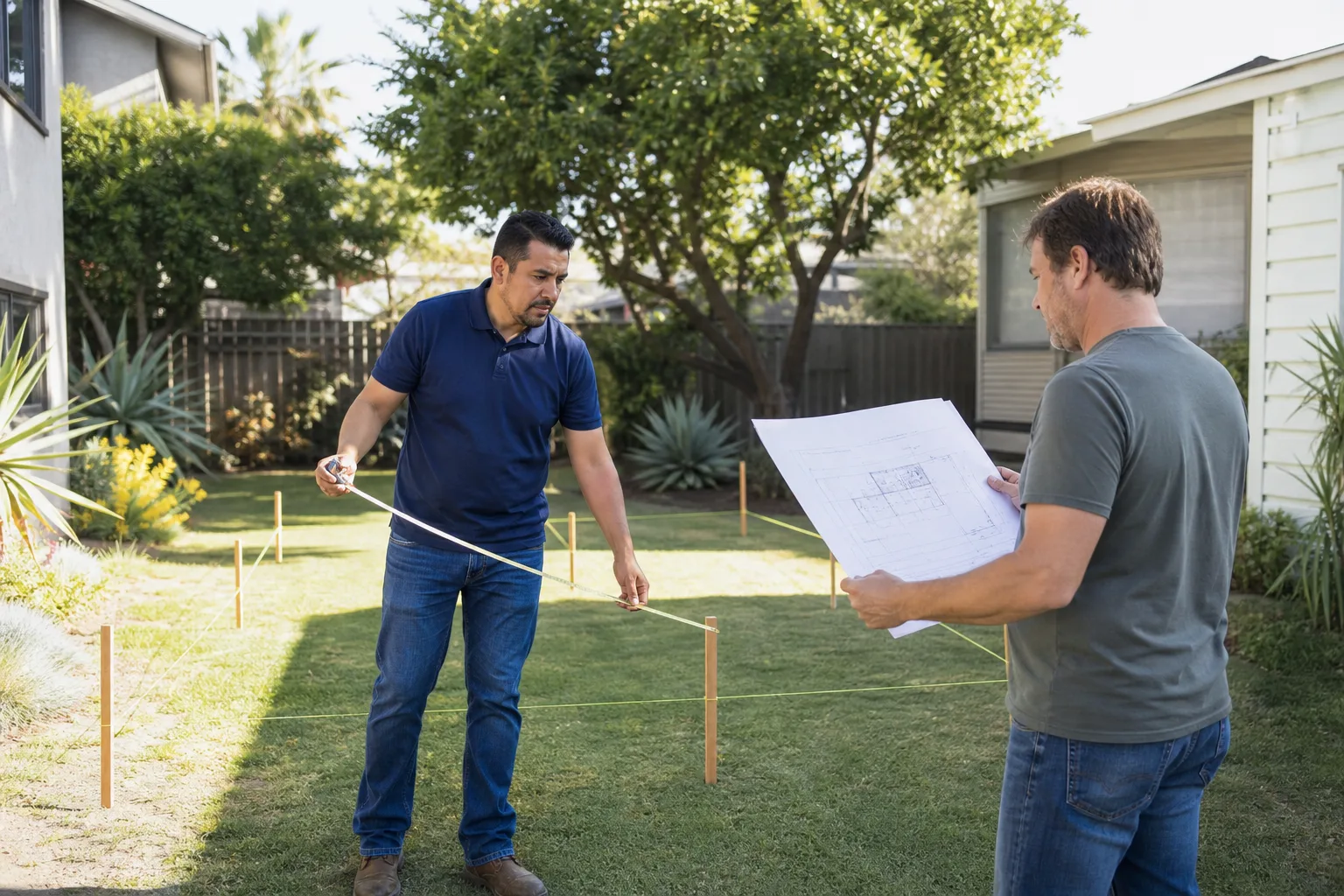
Then there’s the zoning layer. Austin’s ADU rules changed significantly in recent years as part of the HOME initiative, and setbacks, height limits, and impervious cover rules vary by lot. A setback variance (the city’s written permission to build closer to the property line than the standard rule allows) requires a formal application, sometimes a site plan, and a waiting period measured in weeks, not days. Owner-builders routinely underestimate this timeline and end up paying carrying costs on an unfinished shell.
Our team at ADU Builders in Austin handles this paperwork weekly. The permit is not the hard part; the hard part is knowing which of the 17 possible forms applies to your particular lot before you submit the first one.
The Real Cost of Being Your Own General Contractor in Austin
When homeowners price out a DIY general contractor role, they usually subtract the builder’s 15-20% markup and call that the savings. That math misses four cost centers that show up on every owner-managed ADU in Austin.
- Permit management time. A typical Austin ADU permit requires 3-6 rounds of corrections between the DSD and the applicant. Each round takes 5-10 business days. A contractor absorbs this as overhead; an owner-builder eats it as calendar time, which means carrying costs on the construction loan, if there is one, and lost rental income if the ADU was meant to produce revenue.
- Subcontractor sourcing. Licensed electricians, plumbers, and HVAC contractors in the Austin metro are booked 4-8 weeks out during a strong construction cycle. A general contractor with 18 years of Austin relationships gets priority scheduling; a one-off homeowner call gets slotted into whatever window remains. The difference routinely adds 30-45 days to the build.
- Inspection scheduling and re-inspection fees. Austin DSD charges between $75 and $250 per re-inspection depending on the trade. A typical owner-managed ADU runs 3-5 re-inspections. A well-run professional project runs zero to one.
- Liability exposure. If an unlicensed helper gets injured on your site, your homeowner’s insurance may deny the claim. If an unlicensed trade does work that fails after occupancy and you rent the ADU, you carry the liability. A licensed Room Addition Contractor in Austin carries workers’ comp and general liability insurance, and the written guarantee on the work.
The Fielding ADU Austin position on this is simple, because it is the position we take on every job: the price goes in writing before any work starts, and the number you approve on day one is the number on the final invoice. For Room Addition Contractor Maintenance Checklist for Austin Homeowners and related standards, see our resources. Owner-builders can’t make that promise to themselves; the market doesn’t let them. A plumbing rough-in that fails inspection adds materials, labor, and re-inspection fees that no spreadsheet captured in the original budget.
Where DIY Legitimately Reduces ADU Cost
Not everything on an ADU requires a permit. The finish scope, the part of the project that happens after the framing inspection and the drywall inspection, is where a homeowner can save real money without touching the permit card.
Here’s what you can legally and safely do yourself on an Austin ADU:
- Interior painting. No permit, no inspection, no license. A 650-square-foot ADU interior runs $3,500-$5,500 for professional painting in Austin; doing it yourself costs $500-$800 in materials and two weekends.
- Flooring installation. Luxury vinyl plank and laminate click-lock flooring are genuinely DIY-friendly. Professional installation in Austin runs $4-$8 per square foot; doing it yourself cuts that to material cost only, roughly $2-$4 per square foot.
- Fixture installation. After the plumbing inspection is signed off, swapping in a faucet, a toilet, or a ceiling fan is homeowner-legal and straightforward. You’re not touching the rough-in; you’re mounting finished hardware.
- Landscaping and hardscaping. Austin does not permit landscaping the way it permits structures. Crushed granite paths, native plant beds, and drip irrigation lines are all homeowner territory.
- Trim and baseboard. After the drywall inspection closes, finish carpentry is fair game. This work is slow but low-risk, and mistakes are easy to correct.
The honest way to frame it: DIY saves you $15,000-$25,000 on the finish scope of a typical Austin ADU. It can’t legally save you a dollar on the electrical, plumbing, or HVAC rough-in, because Austin won’t let you do that work, period.
Why Owner-Managed ADUs Fail Austin Inspections
In our experience across Austin, owner-managed ADU projects fail inspections at a meaningfully higher rate than professionally managed builds. The most common failure points are consistent enough that we can name them by trade and by deficiency.
- Concrete and foundation inspections. The most common failure is missing or incorrectly placed anchor bolts. Austin’s wind exposure requires specific spacing and embedment, and a homeowner who calls a concrete sub directly often gets a slab poured to a generic residential standard, not the Austin DSD standard for a detached ADU.
- Framing connections. A failed framing inspection is rarely about stud count. It’s about metal connector hardware: hangers, hurricane ties, and strap requirements that the homeowner’s lumberyard cut sheet didn’t include. Austin inspectors check these carefully, and a failed framing inspection stops the entire project until corrected.
- Electrical rough-in. When a homeowner hires an unlicensed electrician to save $2,000, the rough-in fails on bonding, grounding, or AFCI placement. Then the city requires a licensed master electrician to redo the work, and the cost lands at three times the original savings.
- Plumbing vent locations. Austin requires specific vent termination distances from windows and intakes. A homeowner-managed plumbing rough-in fails when the vent exits too close to an operable window, and relocating a vent stack after the roof is sheathed costs a small fortune.
The pattern here is not that homeowners are lazy. The pattern is that Austin’s ADU inspection standard is specific, and the people who pass it daily are the people who do it professionally. When we manage an ADU build, we run a pre-inspection check before the city inspector arrives, because catching a ground wire or a missing strap before the inspector sees it costs hours, not days.
Prefab, Modular, and Conventional Builds: What Changes the Decision
The build method changes the DIY-versus-hire math significantly, and this is where Austin homeowners often miss an option that splits the difference.
Conventional stick-build. The homeowner who acts as their own GC on a stick-build takes on the full scope: foundation, framing, all mechanical trades, exterior cladding, interior finish. This is the heaviest lift, and it is the route where the permit management burden falls entirely on the homeowner.
Prefab and modular platforms. We work with Abodu, Cover, Dvele, and other factory-built systems, and the structural work happens off-site, in a controlled facility. The factory handles engineering, most framing, and sometimes the mechanical rough-in. What remains for the on-site team is site preparation, foundation, utility connections, and final assembly. A homeowner who wants to stay involved but not drown in paperwork can have the factory handle the heavy scope and still do the finish work themselves. For year-round upkeep tips, check our Seasonal ADU Care for Austin: Year-Round Homeowner’s Guide.
The prefab route also compresses the inspection calendar. Because factory work is third-party inspected at the plant, the Austin DSD scope shrinks to site work and connections. For an owner-builder, this removes entire categories of failure risk: no on-site framing inspection, no on-site structural redo.
One caution based on what we’ve seen: prefab ADUs still need licensed Austin trades for the utility connections. A Boxabl or Abodu unit arrives nearly complete, but the moment you connect it to Austin water, sewer, and power, you’re back inside the licensed MEP requirement. The factory cannot pull an Austin electrical permit for you.
If you’re weighing a Garage Conversion Contractor in Austin instead of a detached unit, the math shifts again. Garage conversions often skip the foundation scope entirely, which removes the single most failure-prone inspection for owner-builders. But the existing garage slab almost always needs electrical trenching and plumbing sleeving, which lands you right back in licensed-trade territory.
How to Test Your Project Management Capacity Honestly
Running an ADU build in Austin is a part-time job with full-time consequences. Before you decide to act as your own GC, answer these questions without flinching.
- Can you answer a call from an inspector between 7 a.m. and 4 p.m. on a weekday? Austin DSD schedules inspections in narrow windows. If you work a job that forbids phone use, you’ll miss inspections, and missed inspections carry rescheduling fees and calendar slips.
- Do you know what a setback variance is without looking it up? If the answer is no, expect the permit stage to take twice as long as the city’s published timeline. The terminology isn’t hard; the process is.
- Can you read a construction drawing well enough to catch a subcontractor’s deviation? Subs occasionally cut corners. Your ability to catch a missing strap or a short anchor bolt before the inspector arrives determines whether you pass or fail.
- Do you have 10-15 hours per week for 4-6 months? Owner-managed ADU builds in Austin run longer than professional projects. The extra time on the permit calendar is not free; every month you carry the project costs money in materials storage, temporary fencing, and financing.
- Can you hold a subcontractor accountable when the work is bad? It’s harder than it sounds. A homeowner with one ADU has no repeat business to offer; a contractor with volume does. Bad subs know who they can stall and who they can’t.
- Do you have a plan for when someone gets injured on-site? If the answer is not “workers’ comp and general liability insurance,” you are not ready. Full stop.
Score yourself honestly. If more than two of these gave you pause, acting as your own GC is a gamble where the downside is a half-finished ADU and a permit board covered in red tags. There is a middle path: hire a licensed builder for the permitted scope and do the finish work yourself. That’s a legitimate Austin strategy, and it’s the one we most often recommend to capable homeowners who want to stay hands-on.
Common Mistakes to Avoid
- Hiring an unlicensed electrician to save $2,000. The Austin DSD will catch it at rough-in, and then a licensed master electrician has to redo the work. Net cost: $6,000-$8,000 and three weeks of schedule loss.
- Starting construction before the permit is issued. Austin’s DSD treats unpermitted work as a code violation with daily fines. Tearing out and redoing work because you jumped the gun is the single most expensive mistake in residential construction.
- Assuming the prefab vendor handles everything. Prefab vendors build a unit; they don’t pull Austin utility permits. The moment the unit touches Austin soil, local permitting rules apply to the utility connections.
- Using the wrong setback assumptions. Austin’s ADU rules changed under the HOME initiative, and the correct setback depends on your lot type, zoning district, and whether the unit is attached or detached. Building to yesterday’s code is a plan review rejection waiting to happen.
- Treating the finish work as the finish line. The permit isn’t closed when the drywall is up. Austin requires a final inspection, and an occupant cannot legally live in the ADU until it passes. Clutter on-site, missing handrails, and unlabeled panels all fail finals.
- Budgeting for the permit as a line item. Permit fees for a typical Austin ADU run $5,000-$12,000 depending on size and scope, and those fees are paid at multiple stages. Homeowners who budget a single $3,000 “permit fee” line discover they’re short by thousands.
- Ignoring the tree ordinance and impervious cover limits. Austin protects certain tree species, and impervious cover caps apply to ADUs on residential lots. A homeowner who skips the tree survey and pours a slab anyway can face forced removal of the structure’s offending portion.
When to Call a Professional
Call a professional if you want the ADU permitted, built, and inspected without spending your evenings chasing the DSD portal and your weekends on a ladder. Call a professional if the thought of a failed electrical rough-in or a stop-work order gnaws at you. Call a professional if you’ve been burned by a contractor before and you want the price in writing before the first nail is driven. The Fielding ADU Austin home page explains how our written-price-first policy works. Our team builds ADUs, garage conversions, and room additions across Austin, works with Abodu, Cover, and Dvele prefab platforms alongside conventional James Hardie builds, and every project is backed by the Garrison Standard: a written one-year guarantee that we correct any defect at no charge. Fielding ADU Austin offers free estimates in Austin – call (361) 309-9568.
Frequently Asked Questions
A detached ADU in Austin typically costs $180,000 to $350,000 all-in including permits, site work, utility connections, and finish, with prefab units from Abodu, Cover, or Dvele landing between $190,000 and $280,000 and conventional garage conversions running $120,000 to $200,000 depending on the existing slab and utility conditions. The permit fees alone run $5,000 to $12,000. Call (361) 309-9568 for a written quote on your specific lot.
Yes, Texas law and Austin DSD allow a homeowner to pull their own building permit and act as general contractor on their own property. However, Austin still requires licensed master electricians, plumbers, and HVAC contractors for all mechanical work, which means the homeowner-GC path saves money only on general carpentry, finish work, and project management, not on the trades that most often fail inspection.
Concrete and foundation inspections fail most often on owner-managed Austin ADUs, typically due to missing or improperly spaced anchor bolts that don’t meet Austin’s wind exposure requirements. Framing connection hardware (hangers, hurricane ties, and straps) is a close second. Both are specific, checkable, and inexpensive to correct if caught before the inspector arrives.
Yes. The factory handles the structural engineering and most construction off-site, but the moment the unit connects to Austin water, sewer, and power, the licensed MEP requirement applies, and the DSD still requires a building permit, site plan compliance, and final inspection. The prefab route reduces on-site inspection scope but does not eliminate Austin permitting.
A professionally managed Austin ADU typically takes 4 to 7 months from permit application to final inspection, depending on the build method and the DSD review backlog. Owner-managed builds run 6 to 12 months because permit corrections, subcontractor scheduling, and re-inspections all take longer for a one-off homeowner than for a builder with standing relationships and volume.
Not with a builder who puts the price in writing before any work starts. The Garrison Standard at Fielding ADU Austin guarantees the approved number is the final invoice, with no change orders unless you request a scope change. That’s the protection most homeowners don’t get from a low-bid contractor, and it’s the protection that makes written pricing worth asking about before you sign. Call (361) 309-9568 for a free estimate.
The Bottom Line
The DIY-versus-professional decision on an Austin ADU comes down to one question: where does the permit card say you can work, and where does it say you can’t? Austin lets you swing a hammer and save real money on paint, floors, fixtures, and landscaping. It doesn’t let you touch the electrical, plumbing, or HVAC, and the trades it prohibits are the trades that decide whether your ADU passes inspection or sits red-tagged. Hiring a professional costs more on the front end, but a written price and a written one-year guarantee mean the number you approve is the number you pay, and the work gets done right the first time. That’s the standard we hold ourselves to on every project, and it’s the standard Austin homeowners should demand from anyone they let onto their property. Explore more guides & resources on ADU planning and construction.
Written by Reed Calloway, Owner at Fielding ADU Austin, serving Austin since 2006.